





















































































































































































































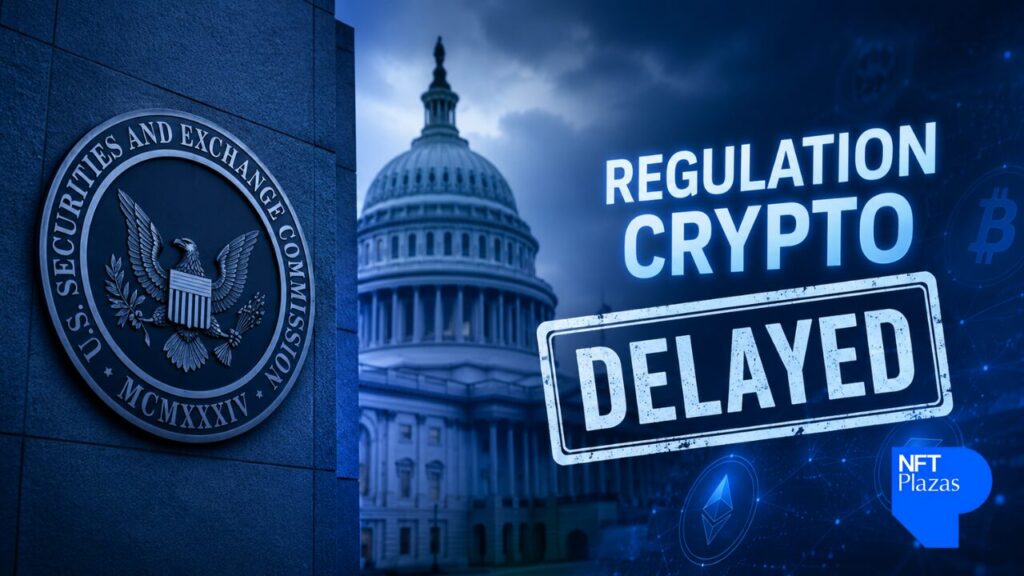














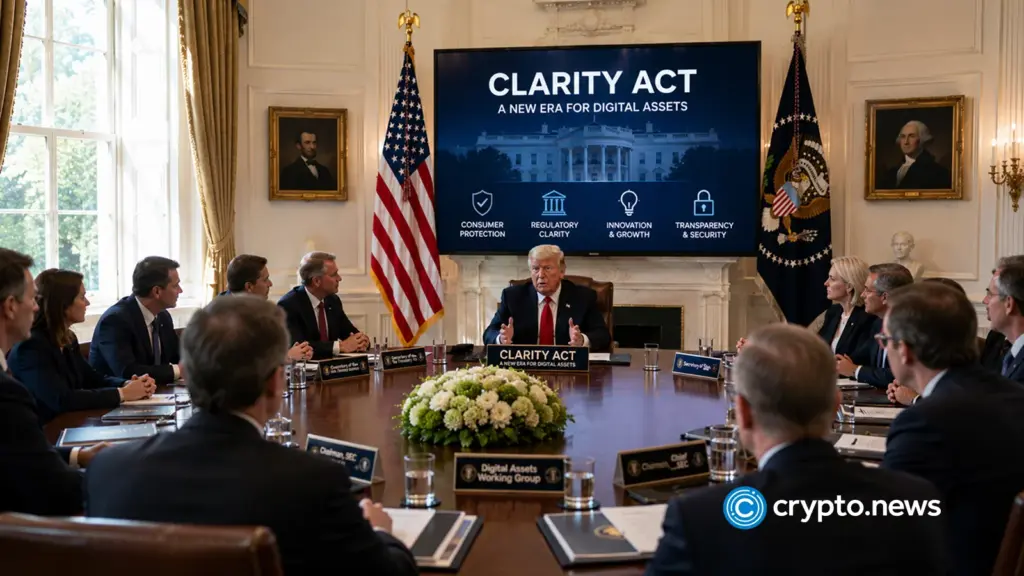




























































































































































































































































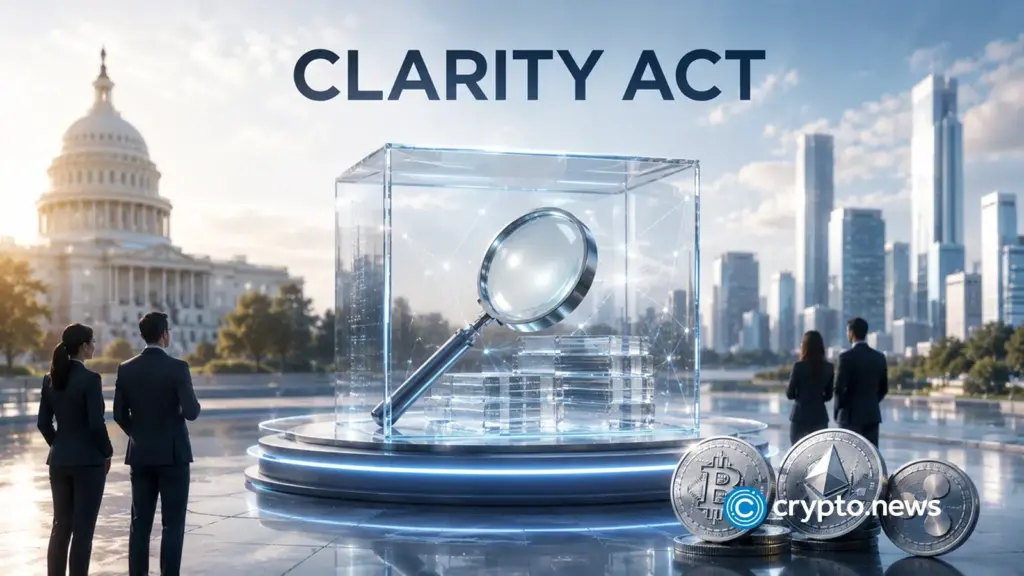














































































































































































































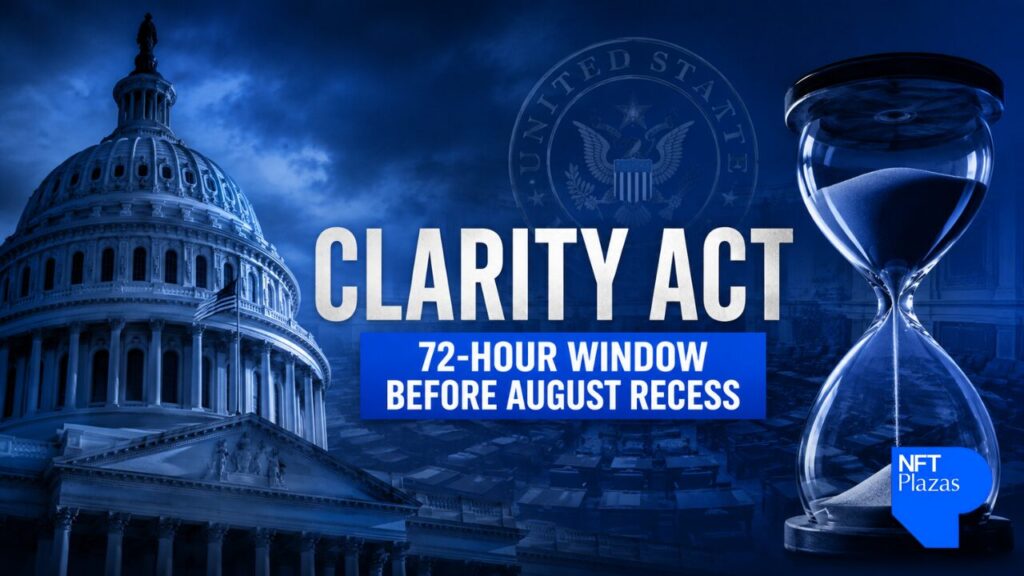










































































































































































































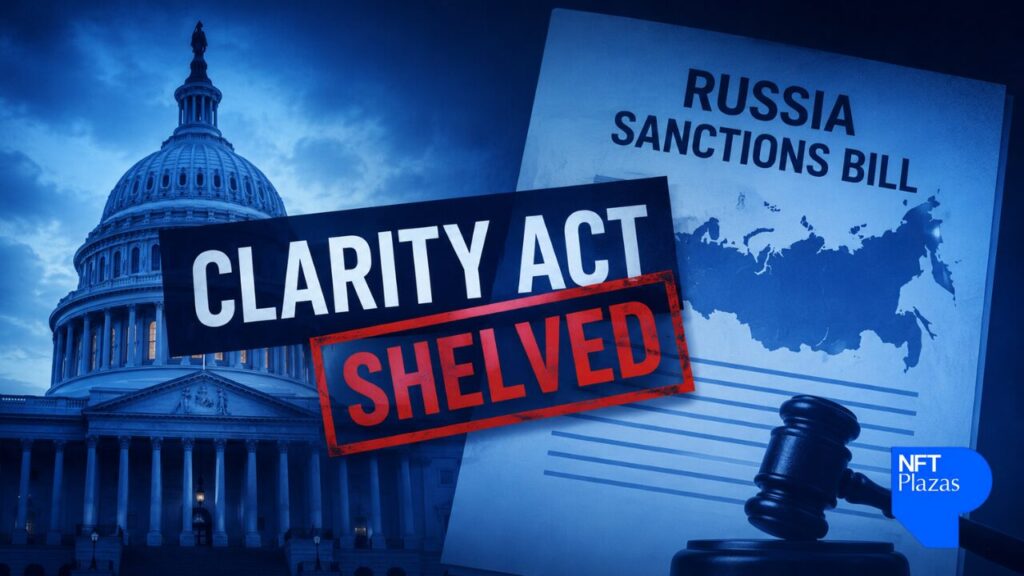



































































































































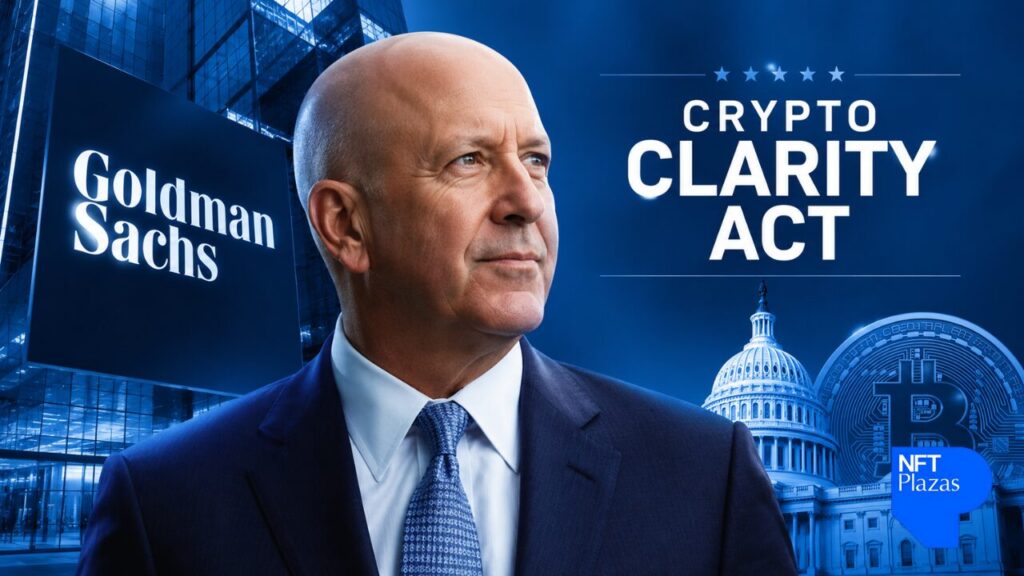

























































































































































































































































































































































































































































































































































































































































































































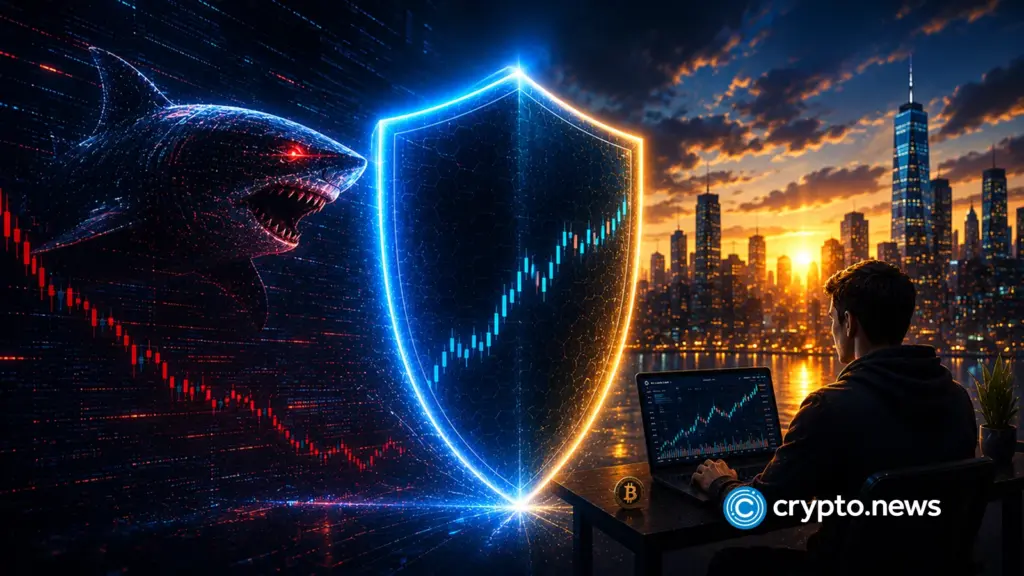







































































































































































































































































































CLARITY Act Misses Trump’s July 4 Target as Window to Pass Shrinks to 25 Days

Key Takeaways
- Patrick Witt’s July 4 goal for the CLARITY Act lapsed with the bill still awaiting a Senate floor vote.
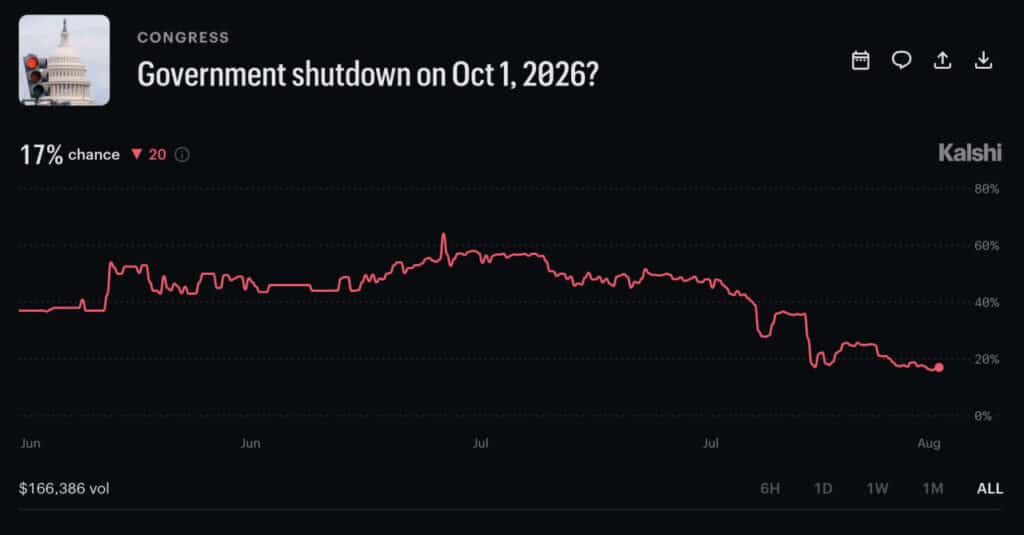
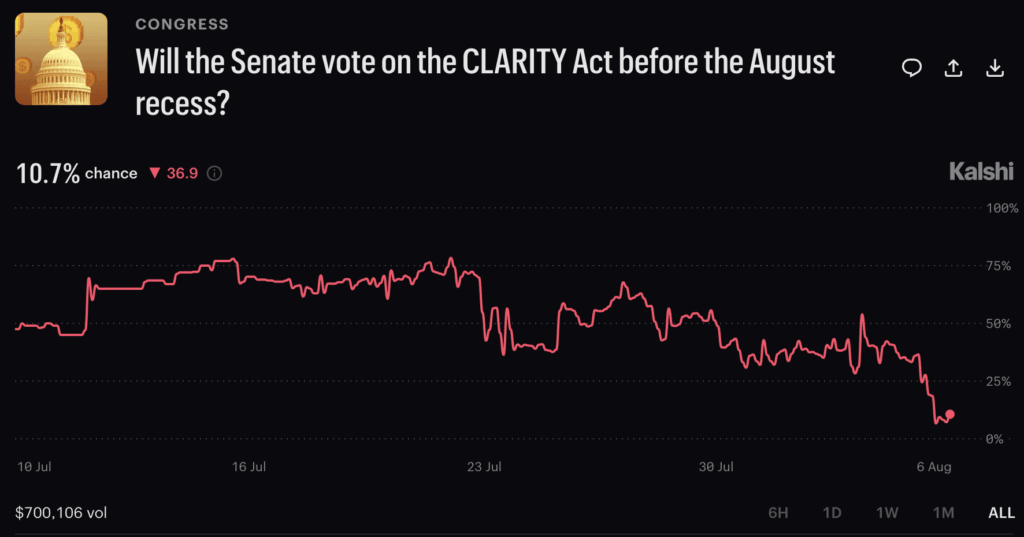
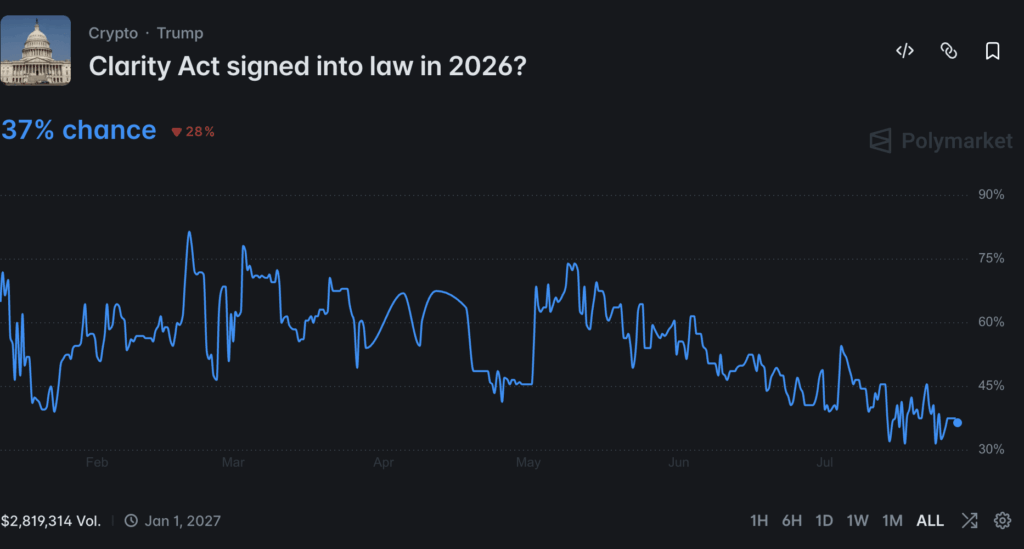
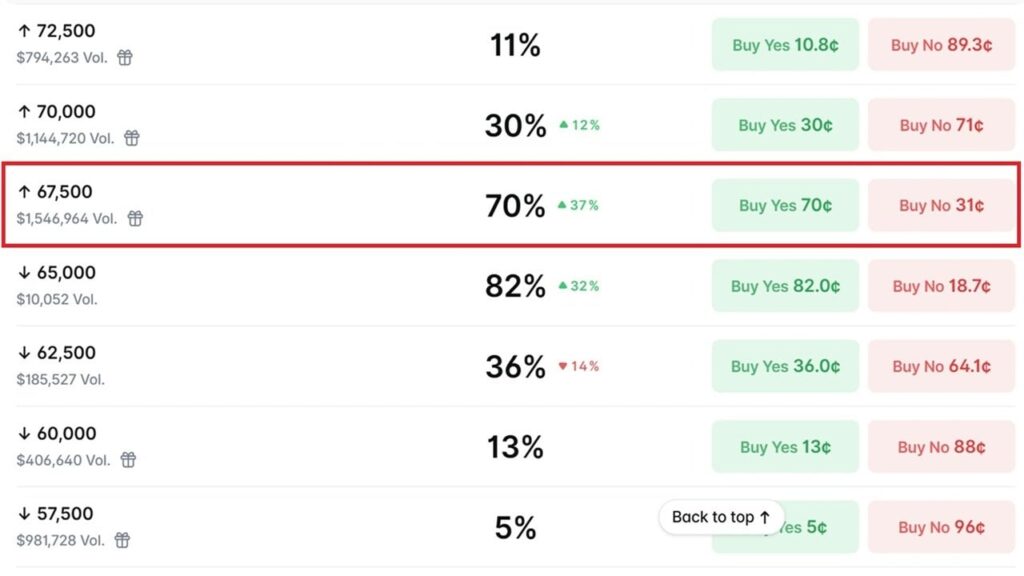
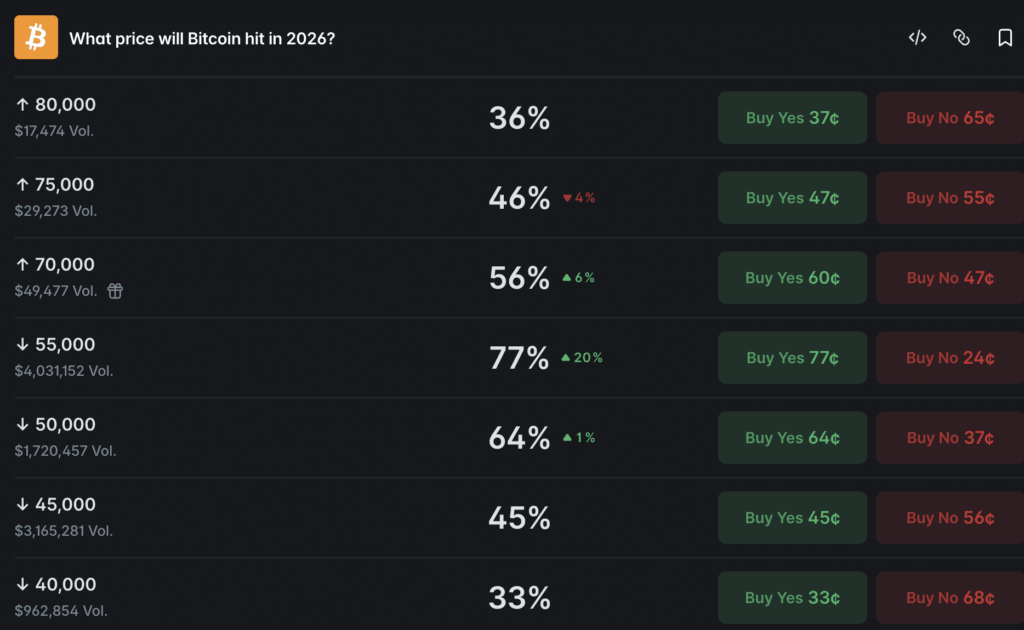
- Analysts now peg 2026 passage odds near 50-50, down from about 60% in June, as ethics talks stall.
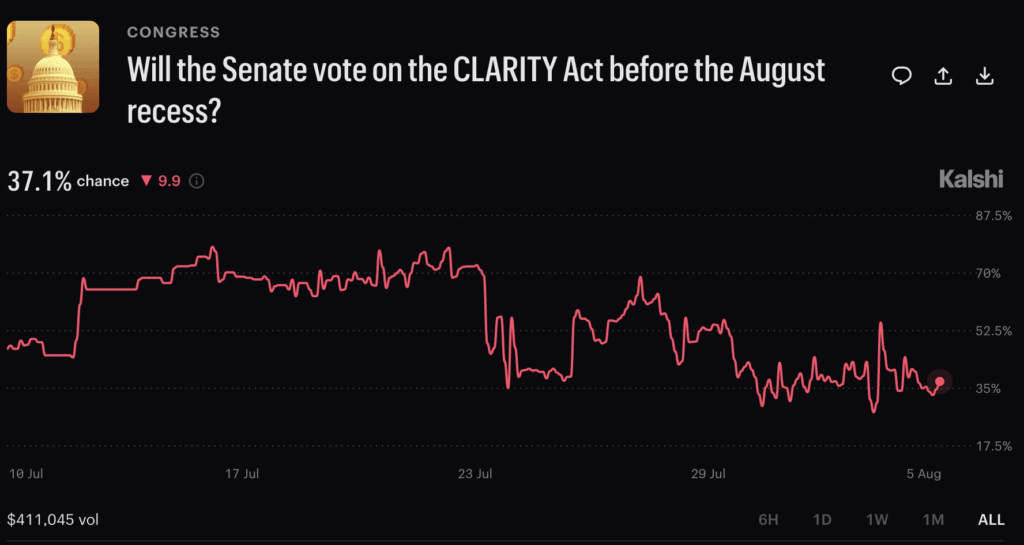
- Republicans need 7 Democrats to reach 60 votes before the Senate’s Aug. 7 recess deadline.
Target Missed, New Window in Sight
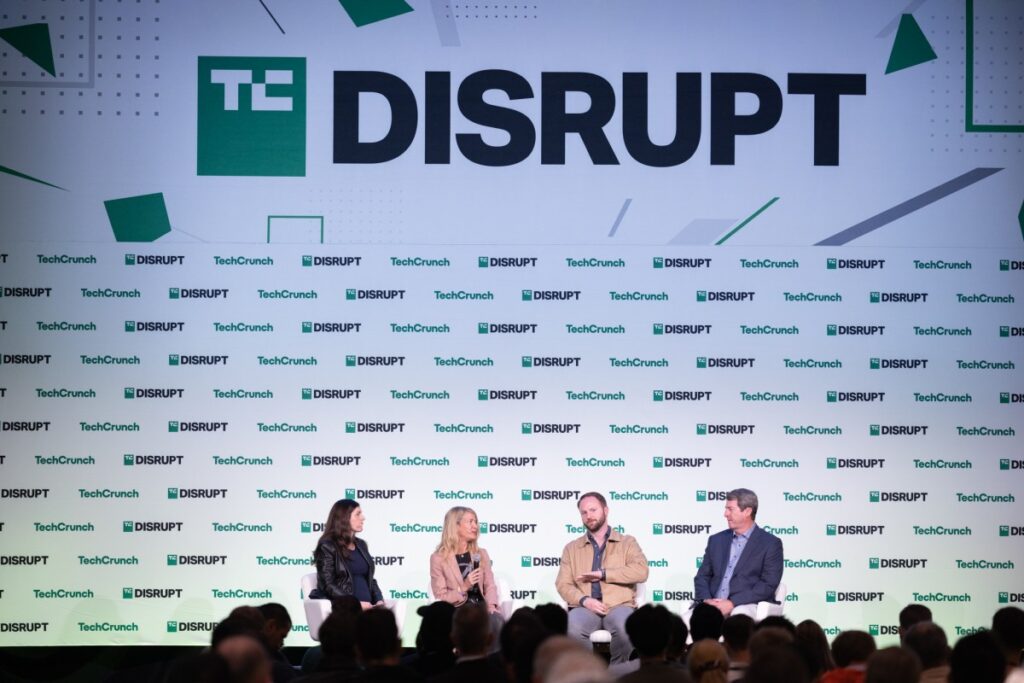
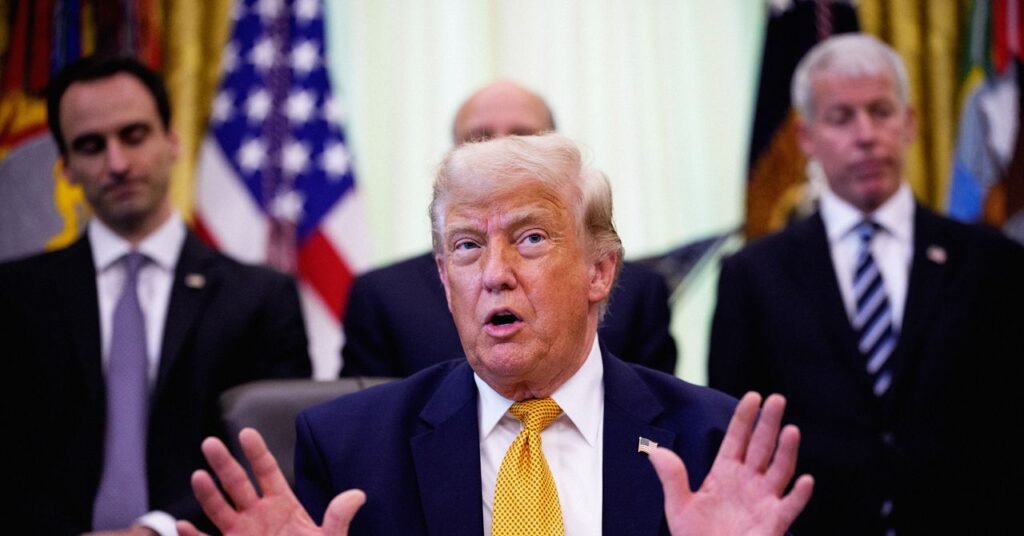
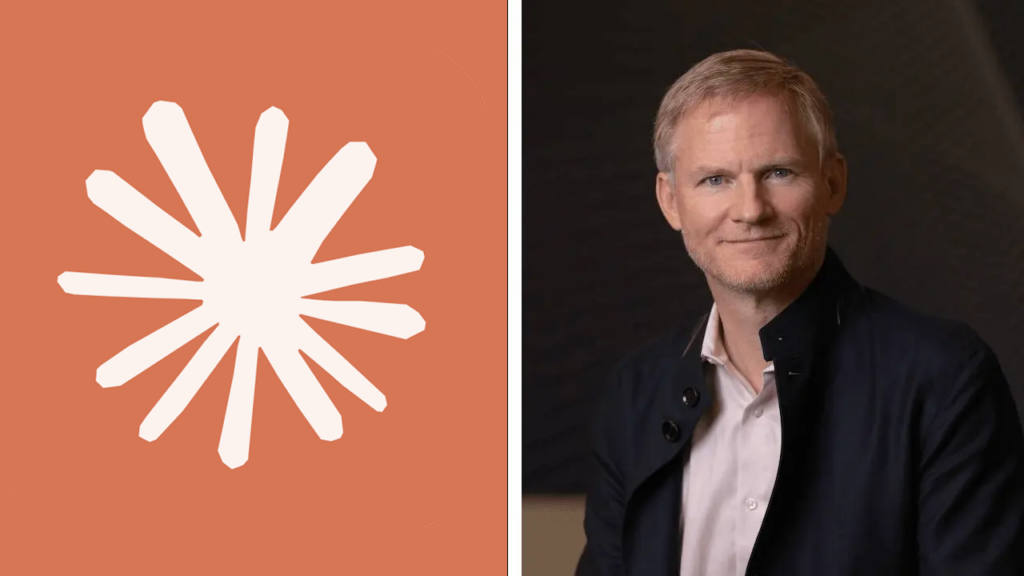
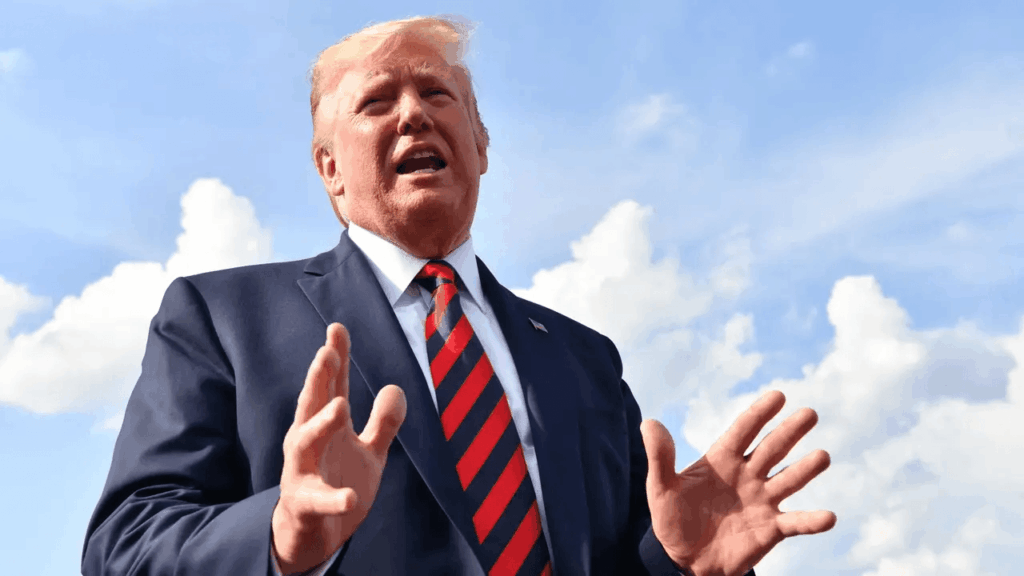
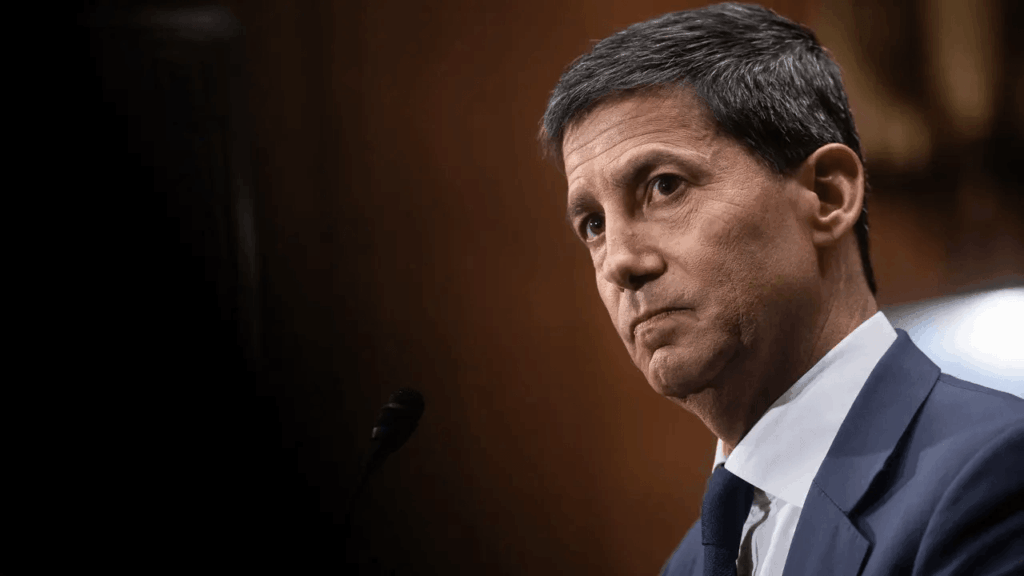
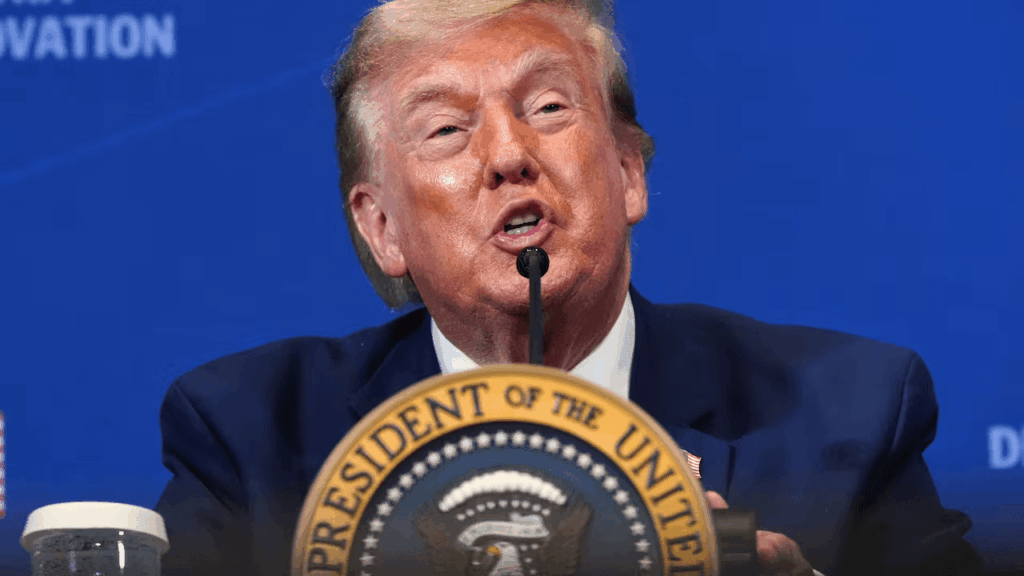
White House crypto adviser Patrick Witt, executive director of the President’s Council of Advisors for Digital Assets, set the target back in May, claiming:
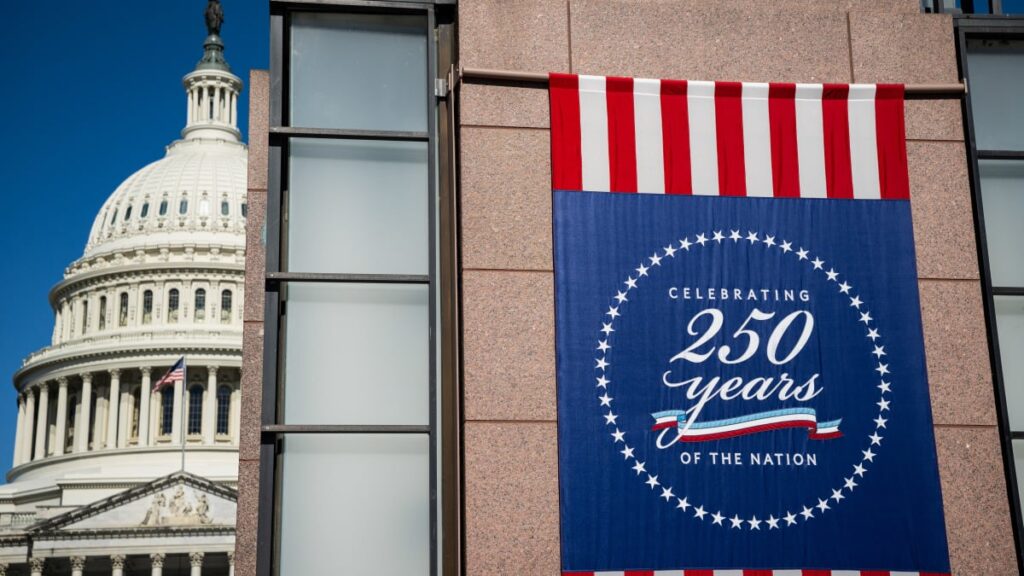
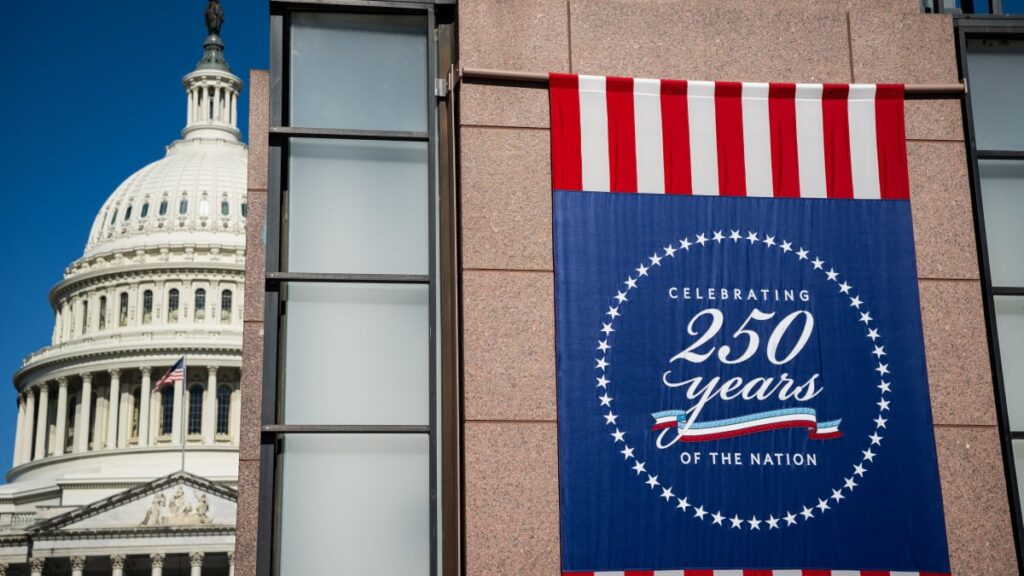
“We’re targeting July 4th. I think that would be a tremendous birthday present for America, celebrating our 250th.”
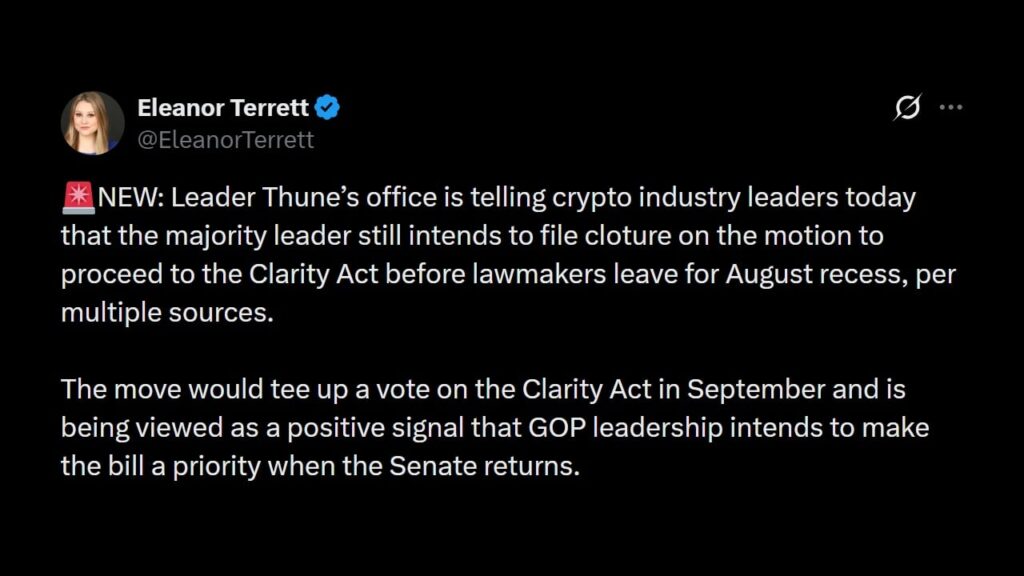
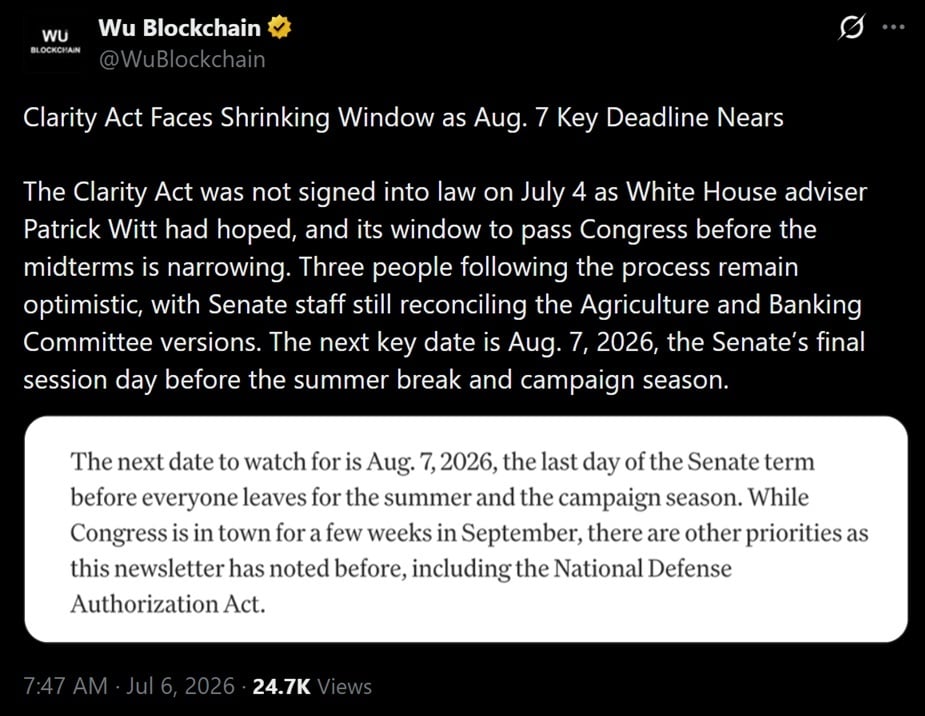
The date came and went without a floor vote, and media outlets reported earlier today that the bill’s window to clear Congress before the midterms is narrowing, though three people following the process remain optimistic.
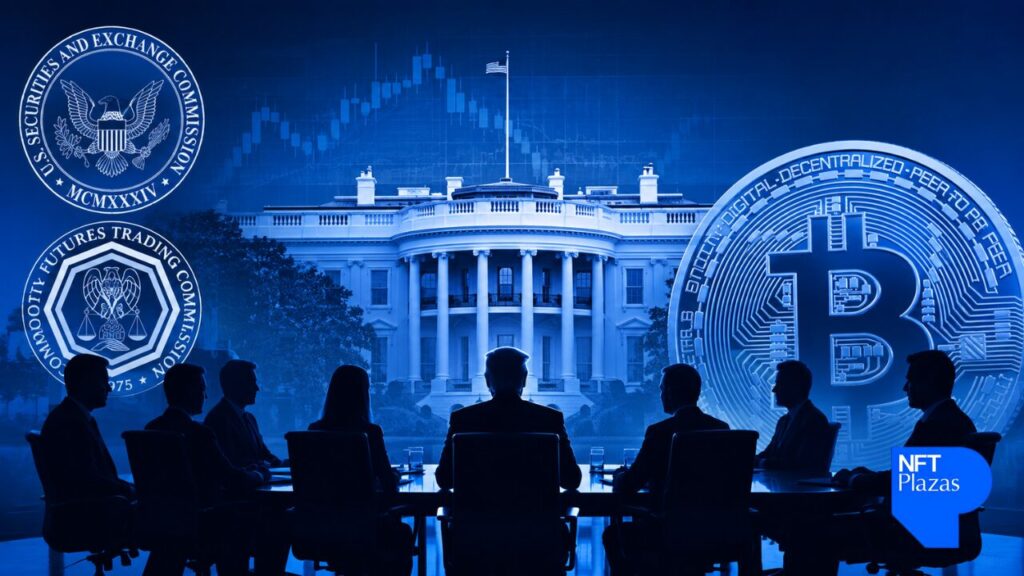
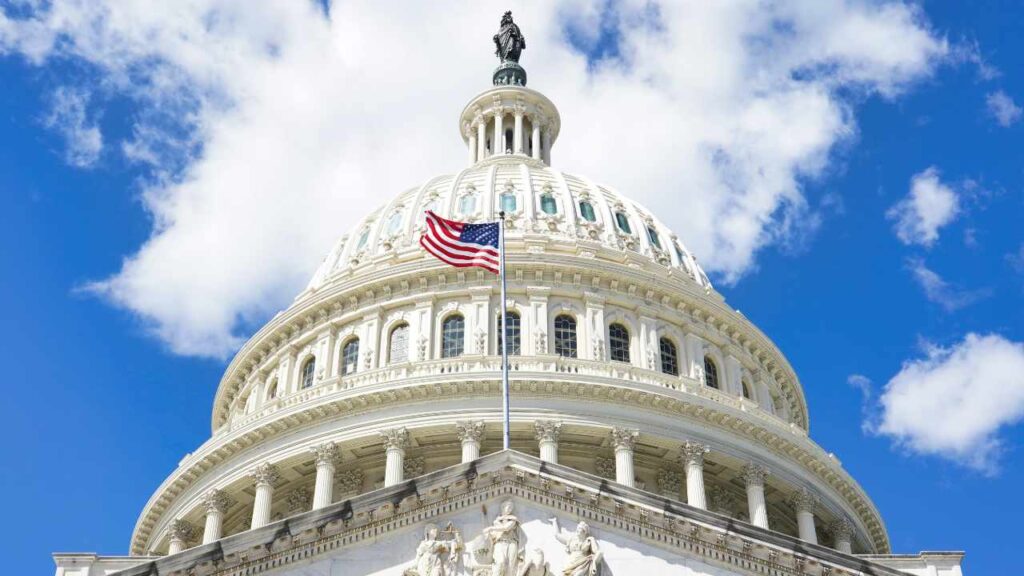
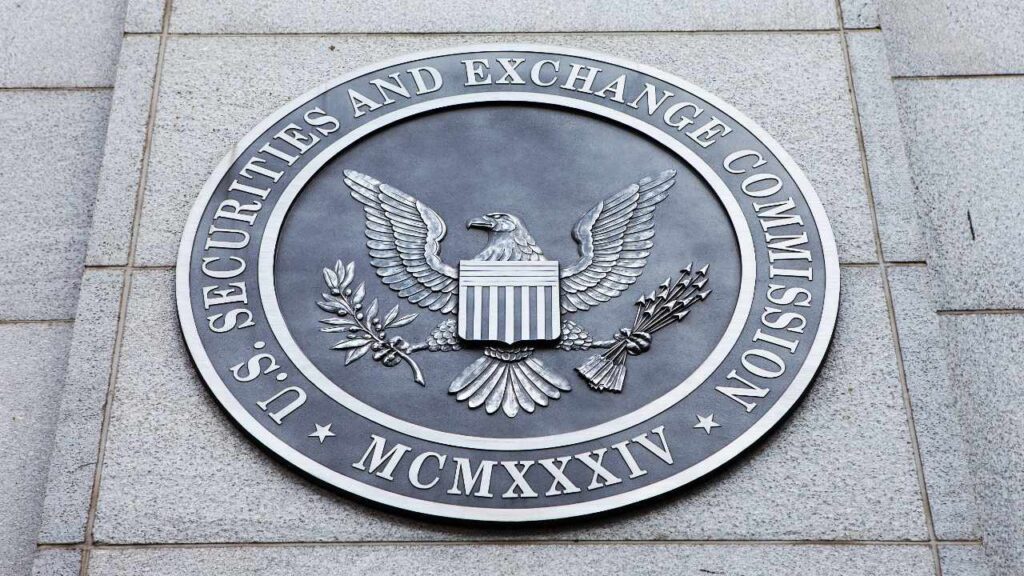
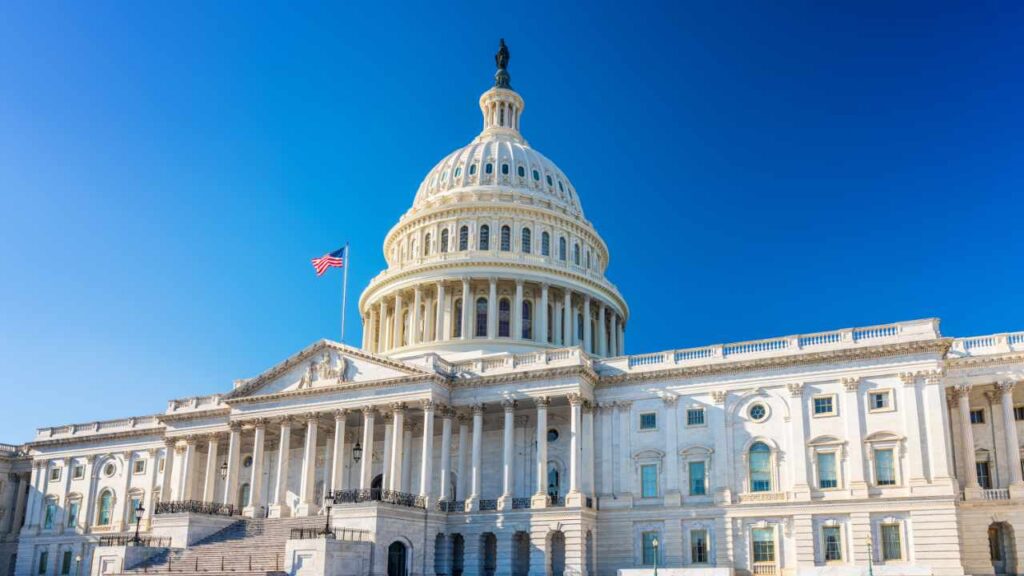
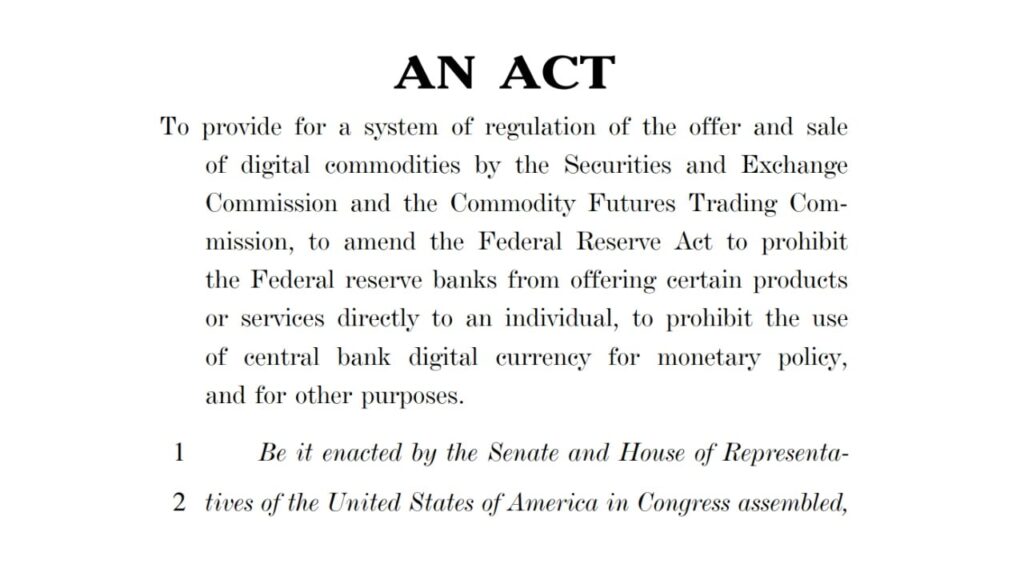
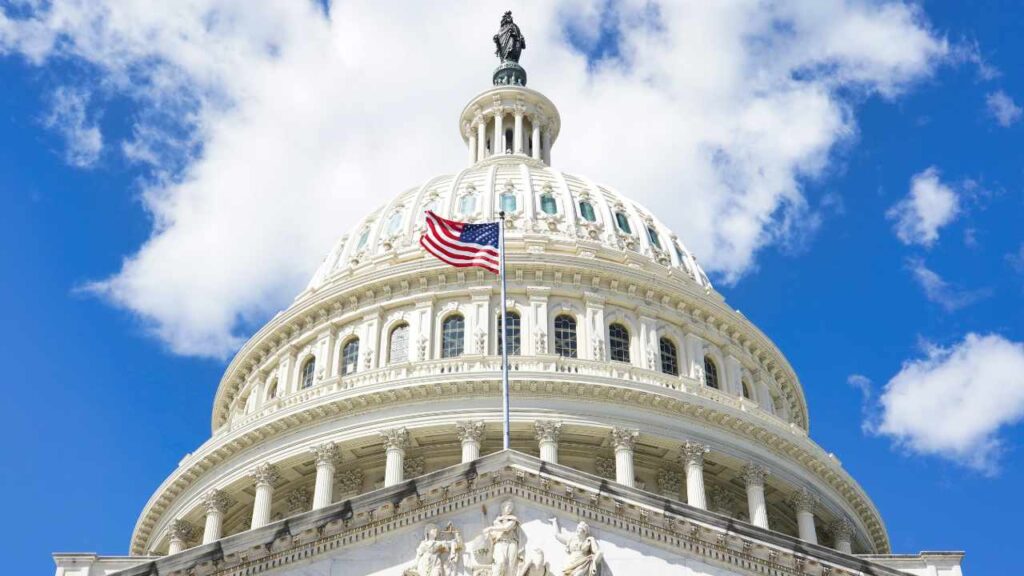
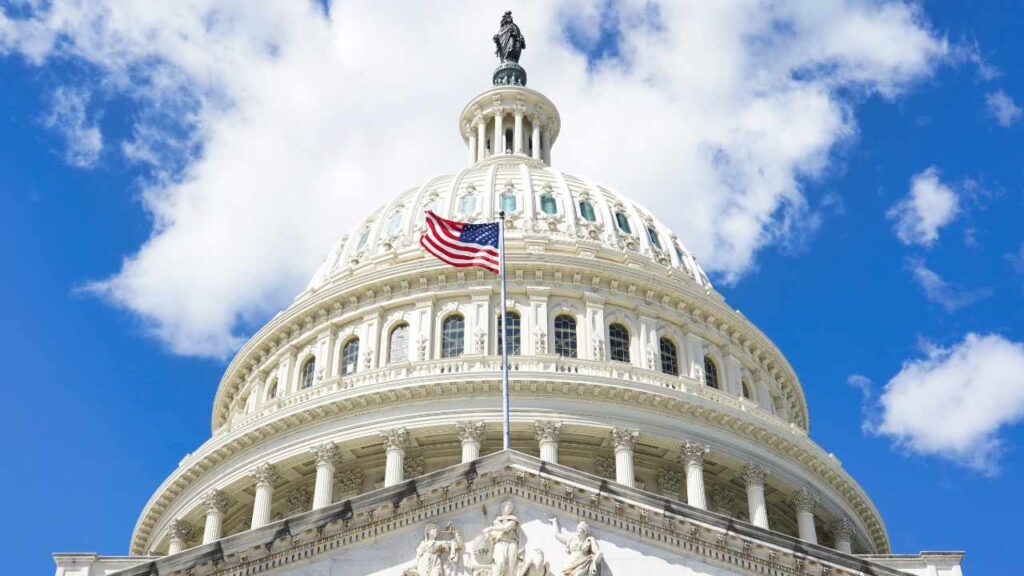
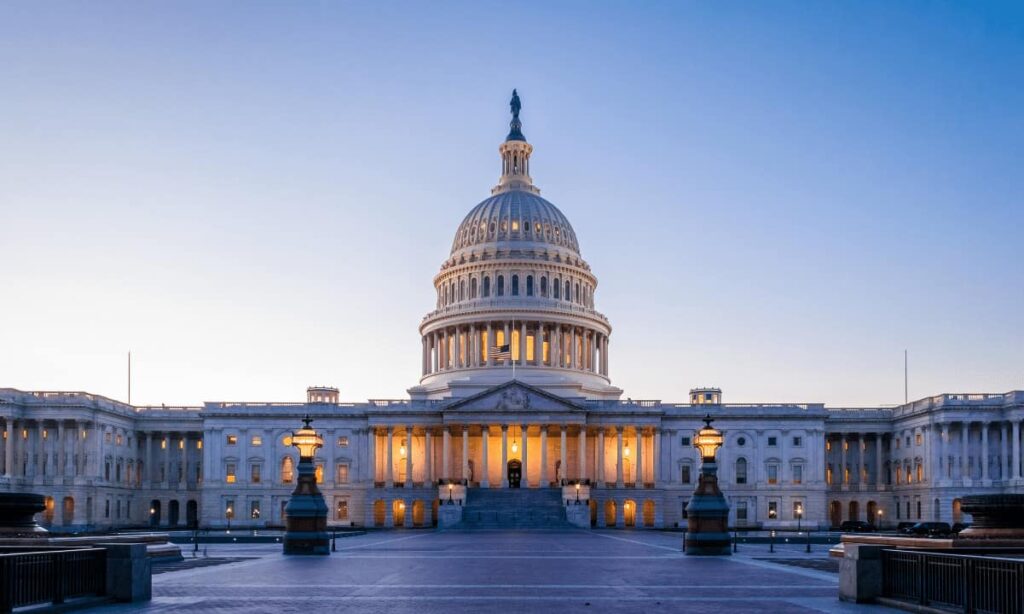
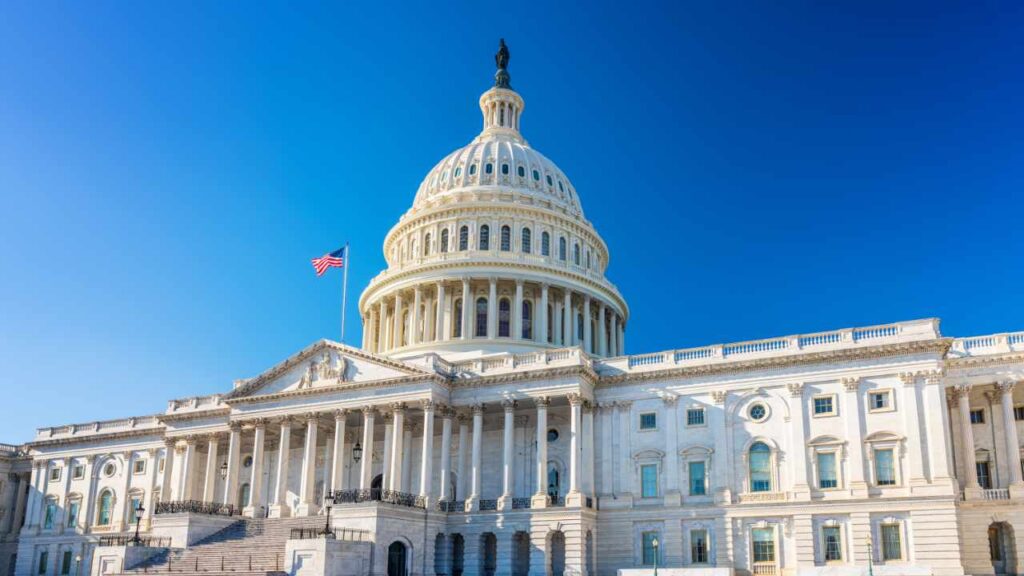
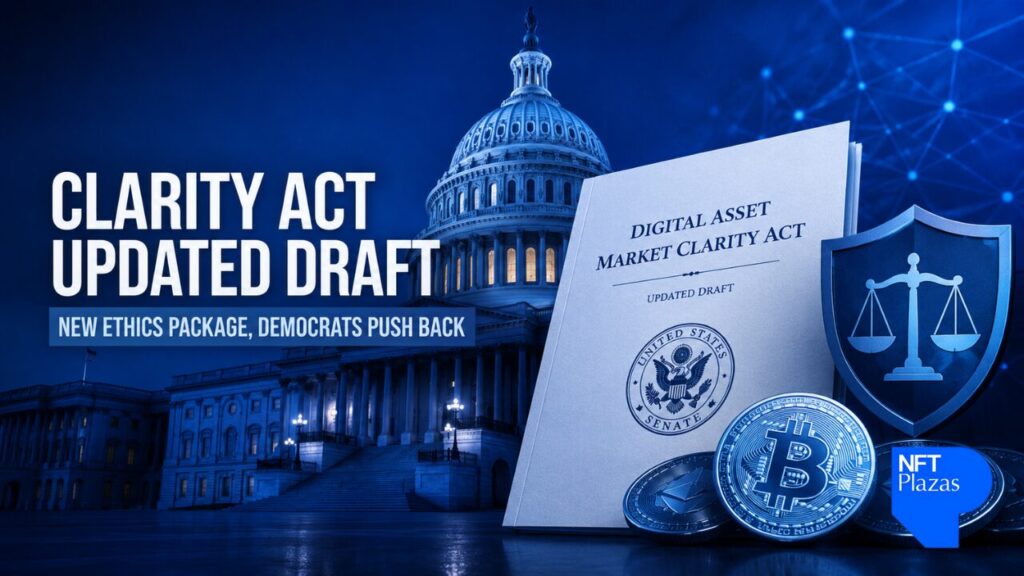
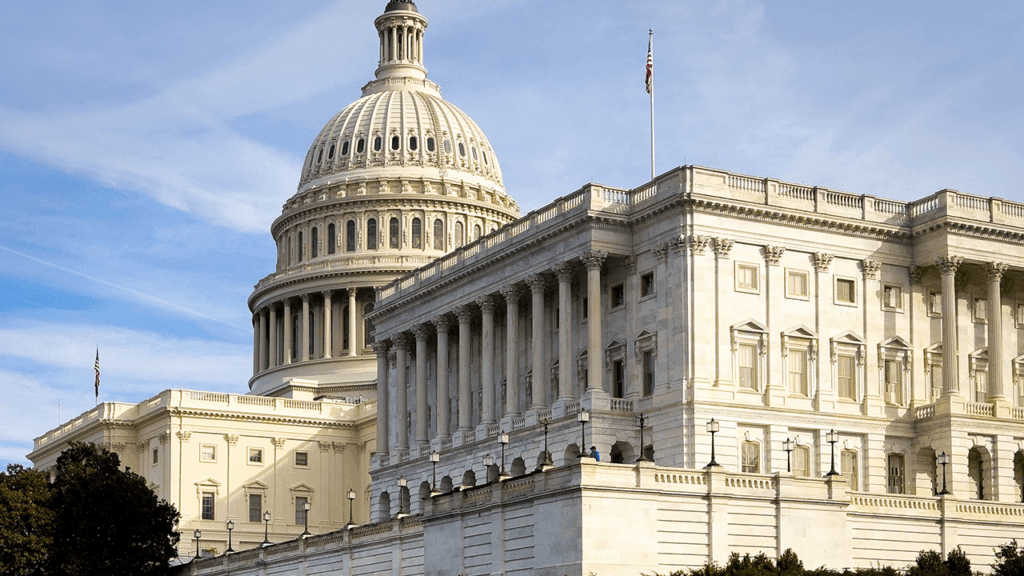
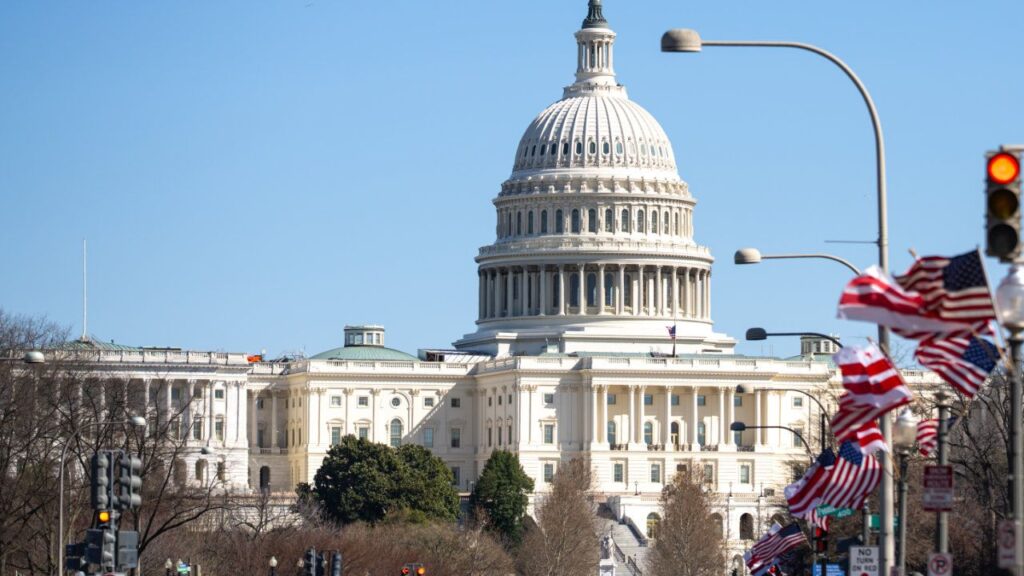
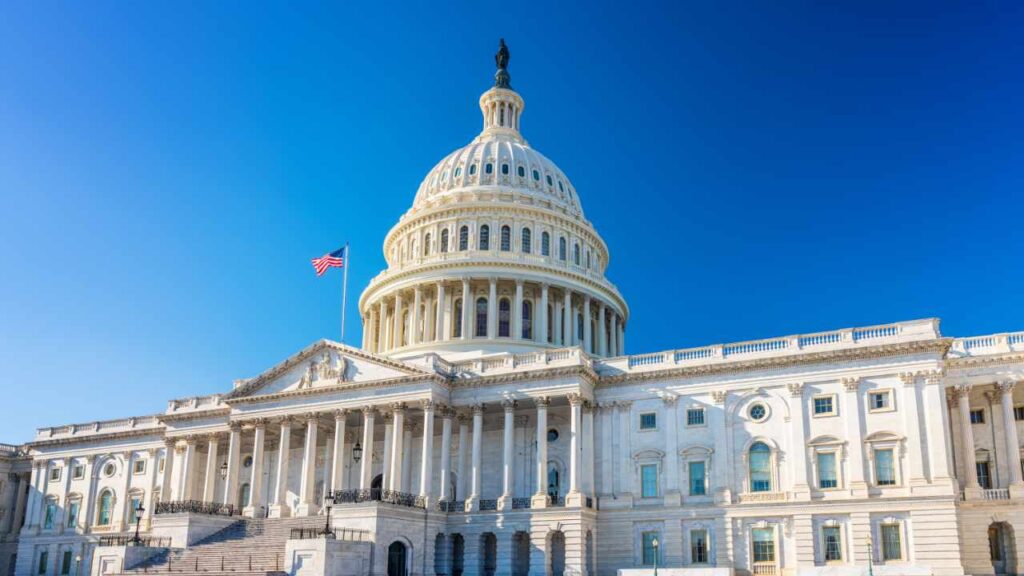
The stakes are hard to overstate. H.R. 3633, which draws jurisdictional lines between the Securities and Exchange Commission (SEC) and the Commodity Futures Trading Commission (CFTC), cleared the House 294-134 in July 2025 and advanced through the Senate Banking Committee 15-9 on May 14. It now sits on the Senate legislative calendar awaiting a floor vote that must clear a 60-vote cloture threshold.
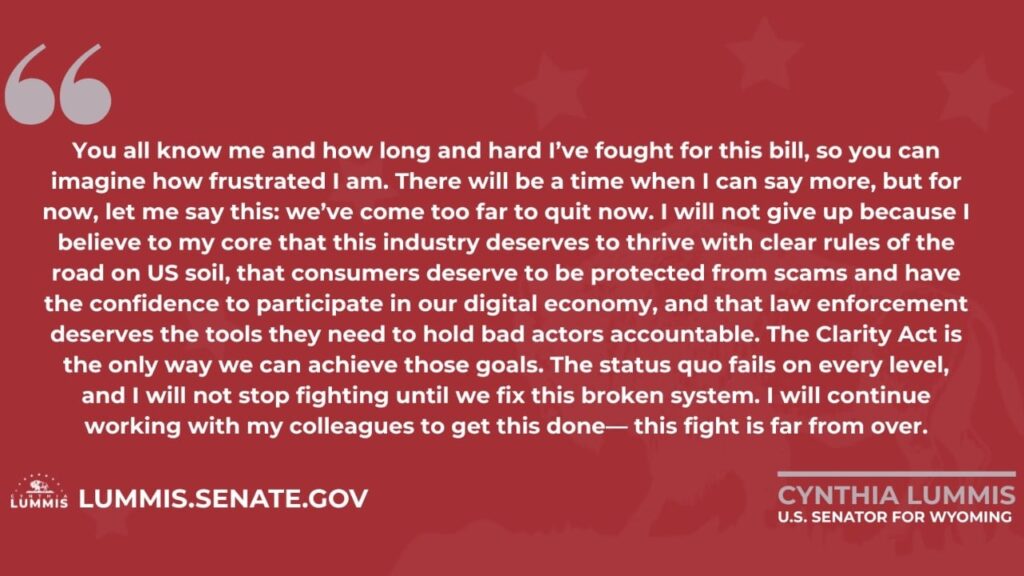
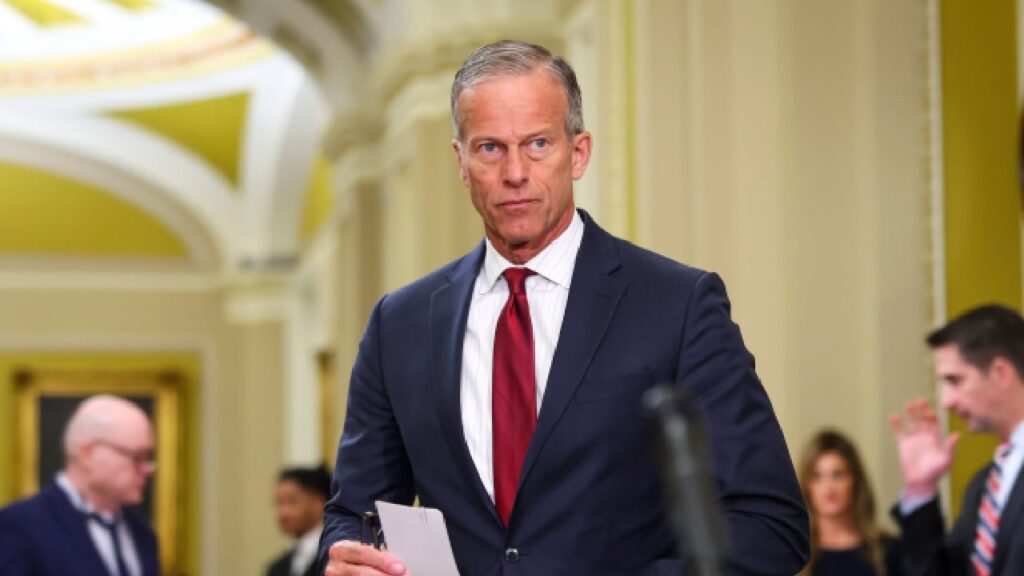
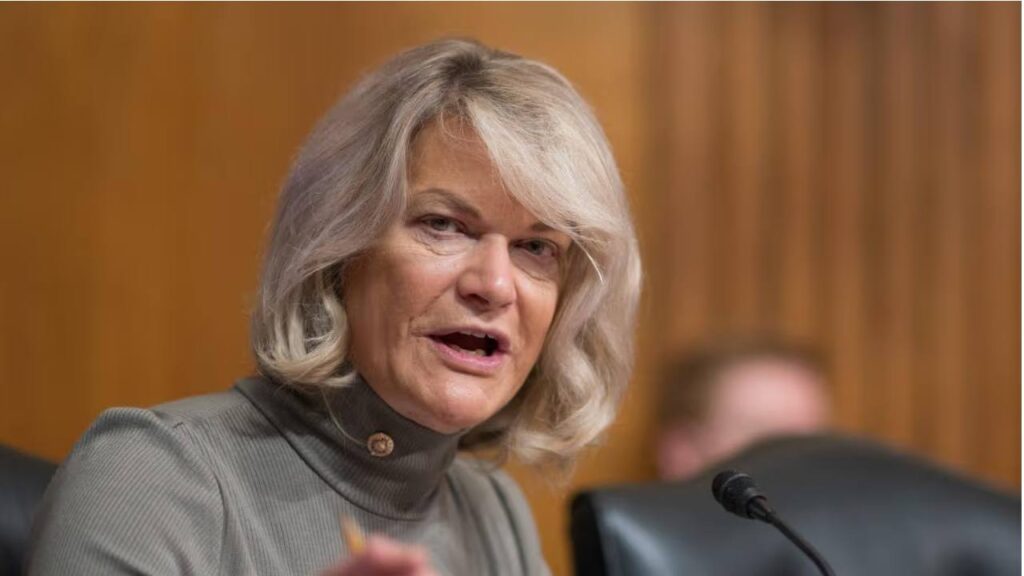
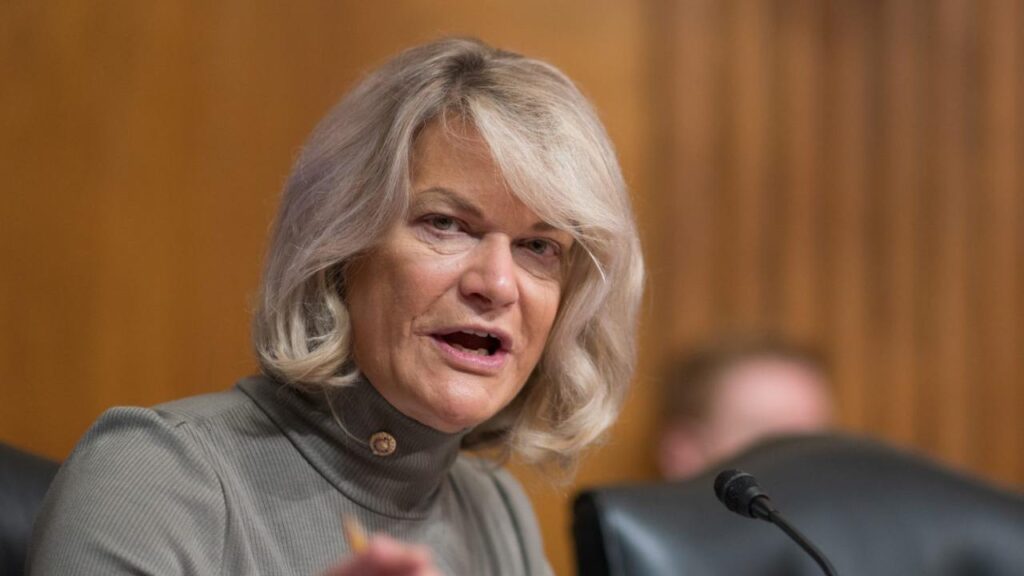
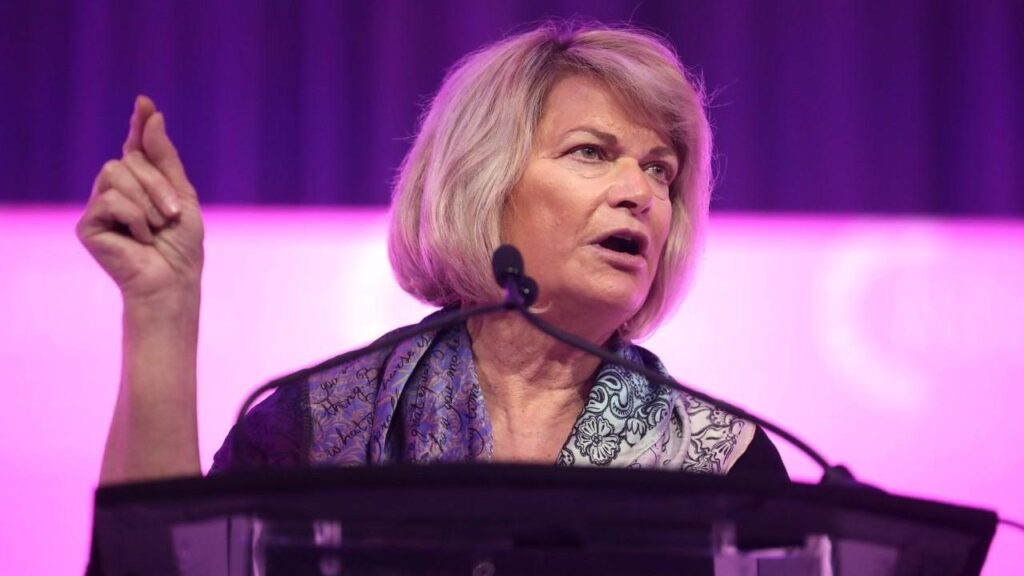
With 53 seats, Republicans need at least seven Democratic votes, a math problem that has defined the bill’s summer. Senate leaders, including Banking Chair Tim Scott and Majority Leader John Thune, have pushed for a July floor vote, with Senator Cynthia Lummis touting the bill’s consumer safeguards.
The Ethics Fight Over Trump Family Crypto
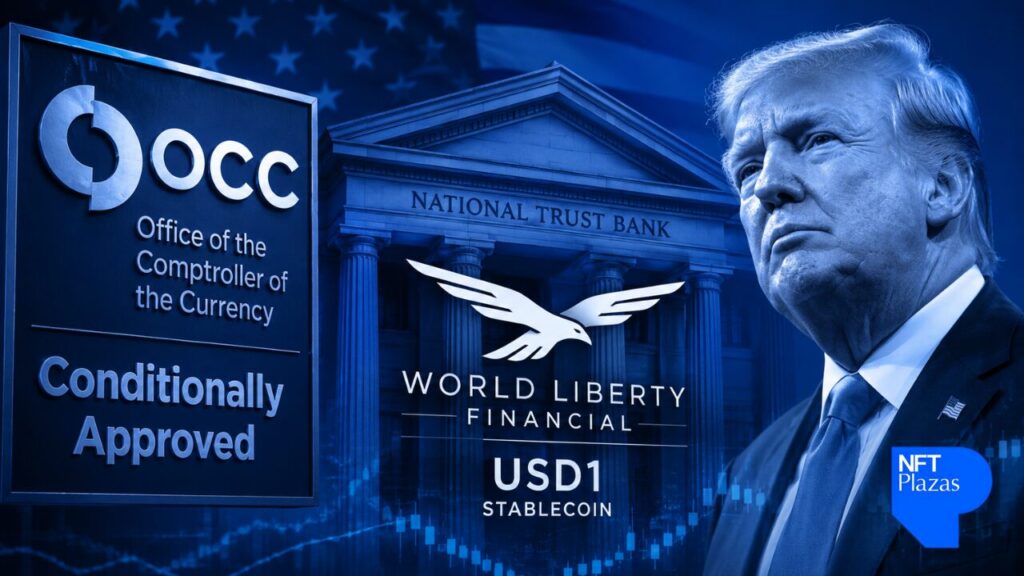
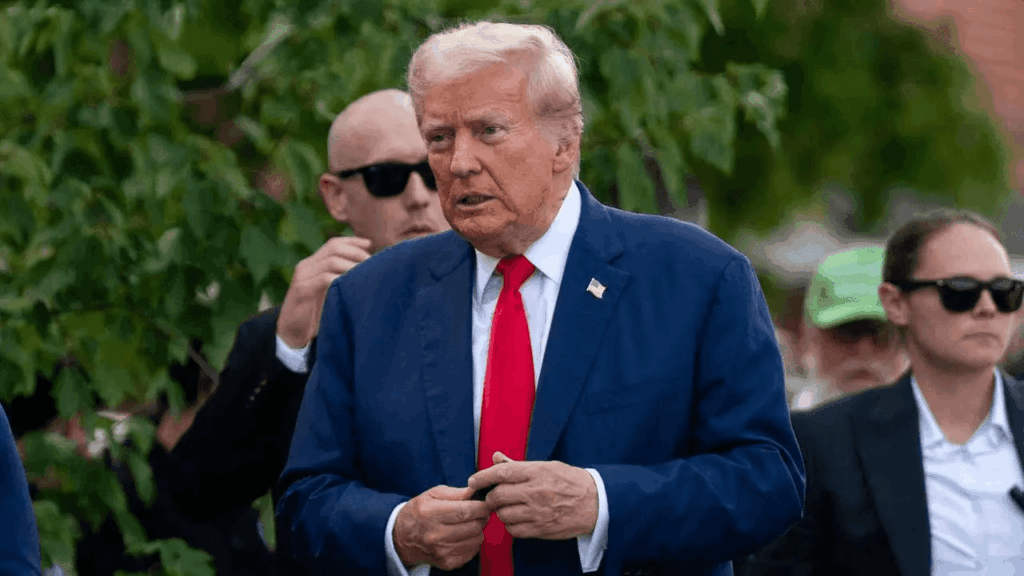
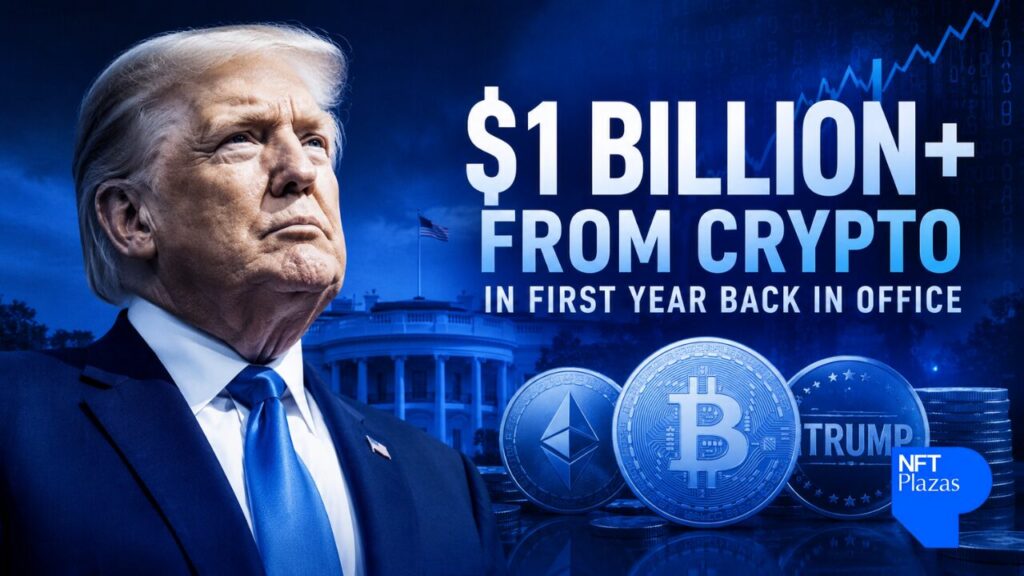
The core standoff is conflict-of-interest language. President Trump’s June financial disclosure showed crypto-related income that topped $1 billion in 2025, alongside bitcoin holdings exceeding $50 million held through World Liberty Financial entities. Democrats, including Senators Ruben Gallego and Cory Booker, have demanded enforceable ethics standards addressing conflicts tied to the president and his family as the price of floor support, and negotiations have stalled over the issue.
Republicans countered by narrowing enforcement authority to the U.S. attorney general rather than state attorneys general, an offer Democrats rejected as circular, given the attorney general serves at the president’s pleasure.
Developers, Prosecutors and a 25-Day Clock
A second unresolved fight concerns the bill’s Section 604 developer protections. Coinbase, Uniswap and a16z Crypto have urged lawmakers to preserve safeguards for non-custodial developers, arguing that writing code should not trigger registration obligations. The National District Attorneys’ Association also warned:
“The carve-outs would severely impair the ability of law enforcement and prosecutors to investigate, trace, and prosecute criminal activity.”
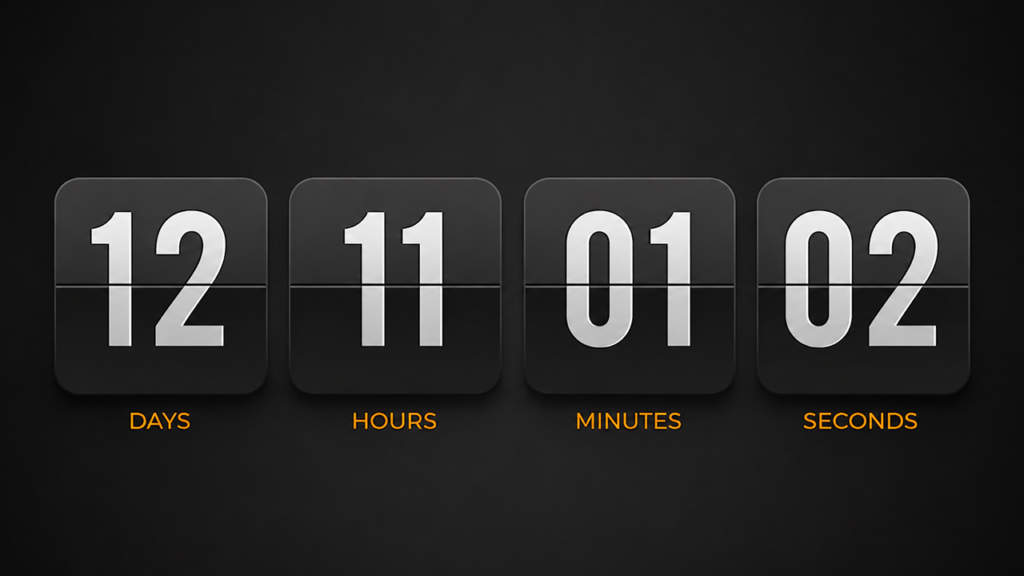
The calendar leaves little room for error. The Senate returns July 13, compressing meaningful floor time to roughly two to three weeks before the Aug. 7 recess, a 25-day stretch that analysts treat as the effective deadline for passage this year. Odds of the bill becoming law in 2026 have slipped to about 50-50, down from roughly 60% in June.