

























































































































































































































































































































































































































































































































































































































































































































































































































































































































































































































































































































































































































































































































































































































































































































































































































































































































































































































































































































































































































































































































































































































































































































































































































































































































































































What is self-certification? Crypto’s permission slip, reversed



For a decade, a token’s legal status was whatever the SEC eventually sued it into. The CLARITY framework flips the default: projects certify their own maturity, and the government gets 60 days to object. Here is how the machinery works, where it came from, and where it can be gamed.
Summary
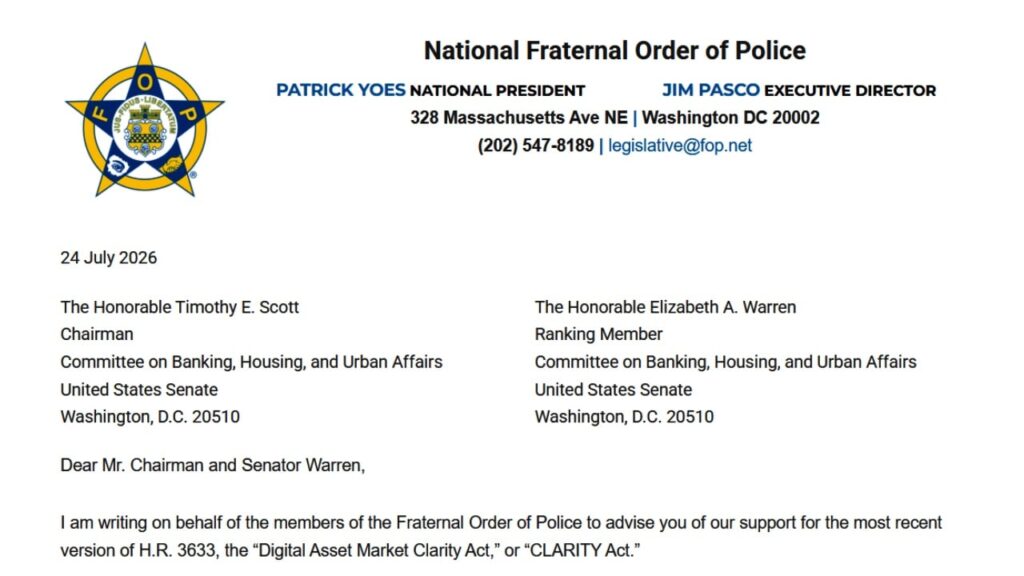
- Self-certification is the CLARITY framework’s procedural engine: an issuer, affiliate, or decentralized governance body certifies that a blockchain is mature, creating a rebuttable presumption the SEC has a fixed window, 60 days in the current architecture, to contest, with disputes appealable in federal court.
- Certification is the exit door from securities treatment: a certified-mature network’s token graduates from SEC oversight and originator disclosure obligations to CFTC jurisdiction as a digital commodity.
- The working maturity test centers on decentralization, with the draft’s bright line that no person or group under common control holds 20% or more of the tokens or voting power, alongside functionality requirements.
- The model is borrowed: CFTC-regulated exchanges have listed new futures contracts by self-certification for decades, a regime that processed thousands of products, including the first Bitcoin futures, with the agency rarely objecting.
- The design’s entire character depends on parameters still delegated to rulemaking, the evidentiary burden, what happens during a challenge, and penalties for gaming, which is why practitioners call the certification process the next decade’s Howey battlefield.
Every regulatory system has a default setting, and the default matters more than the rules. For crypto’s first American decade, the default was prohibition-by-uncertainty: a token was presumptively suspect, its status determinable only by asking an agency that rarely answered or by being sued, and the safest legal advice was silence, offshore incorporation, or both. The CLARITY framework’s deepest change is not any classification it makes; it is the reversal of the default. Under its self-certification machinery, a project asserts its own network’s maturity, files the certification, and proceeds, and the burden shifts to the SEC to object within a fixed window or watch the assertion harden into status. Permission becomes rebuttal. It is the least discussed and most consequential mechanism in the bill, it has a longer regulatory pedigree than critics assume, and it contains, in its still-unwritten parameters, the exact places where the next generation of legal fights will live. This guide explains the machine: what gets certified, how the process runs, where the model came from, and how to think about its failure modes.
What gets certified, and what certification buys
The object of certification is maturity, the framework’s term for the condition that ends a token’s dependence on securities law, and the concept has to be understood through the problem it solves.
Under the framework’s architecture, a token born in a fundraising transaction starts life attached to securities machinery: the offering is an investment contract, and the asset, typically an ancillary asset in the bill’s vocabulary, carries originator disclosure obligations for as long as its value depends on the entrepreneurial efforts of an identifiable team. That dependence is the securities rationale in miniature, investors relying on managers deserve disclosure about them. But networks are built to outgrow their builders: a blockchain whose validation, development, and governance have dispersed beyond any controlling group no longer has a manager whose efforts drive the token’s value, and at that point the securities rationale expires. The framework calls that condition maturity, and certification is the legal act of declaring it.
The working test has two prongs. Functionality: the network operates, processes transactions, and serves its stated purpose, a bar meant to screen out paper networks certifying vaporware into commodity status. And decentralization, where the draft supplies the number the entire industry has memorized: a network is not controlled when no person or group under common control holds 20% or more of the tokens or the voting power. Twenty percent is the bright line that a decade of decentralization theater never had, and its arrival converts governance and token-distribution decisions, treasury sizes, founder allocations, validator concentration, from marketing questions into legal ones, made at launch and documented for the file.
What certification buys is the regime change: a certified-mature network’s token exits SEC jurisdiction and originator disclosure, and lands under the CFTC as a digital commodity, tradable on registered digital commodity exchanges, held by brokers and custodians under commodity rules, beyond the reach of the securities enforcement apparatus. It is, formally, the first legal path from token launch to commodity status in American history, and self-certification is the door.
How the process actually runs
The machinery is a sequence with a clock, and each step allocates power deliberately.
Step one: the filing. An issuer, an affiliate, or, in the provision’s most quietly radical clause, a decentralized governance system itself can certify that a blockchain meets the maturity requirements, submitting the certification with supporting analysis. That standing rule matters: networks whose founding teams have dissolved or departed, historically orphaned in any process requiring an issuer, can be certified by their own governance, which is the first time American law has contemplated a DAO performing a regulated legal act on its own behalf.
Step two: the presumption. A filed certification creates a rebuttable presumption of maturity. The project does not wait; the status operates unless displaced, which is the reversal of default doing its work.
Step three: the window. The SEC has a fixed period, 60 days in the current architecture, to contest a certification it believes is wrong, bringing its objection with the burden of showing the network fails the test. Silence past the window leaves the certification standing. An objection triggers a proceeding, and, step four, the appeal: disputes go to federal court, which means an Article III judge, not the agency, holds the final word on any contested maturity claim. The judicial backstop is the industry’s insurance policy against a hostile future commission running out the clock on every filing; the fixed window is the drafters’ insurance against the agency’s older strategy of simply never answering.
Read as an allocation of power, the sequence is precise. The project moves first and carries the documentation burden. The agency gets one shot, on a clock, with the burden of rebuttal. The courts arbitrate. And the composition of the commission doing the objecting, at an SEC whose members now serve at presidential pleasure under this term’s removal jurisprudence, becomes a live variable in every certification strategy, which is a sentence worth rereading before assuming the machinery runs the same way under every administration.
Where the model came from
Self-certification sounds like deregulatory novelty, and its critics frame it exactly that way. The record is more interesting: American derivatives law has run on self-certification for a quarter century, and the precedent is the strongest argument on both sides of the current debate.
Since the Commodity Futures Modernization Act of 2000, CFTC-registered exchanges have listed new futures and options contracts by self-certification: the exchange files a certification that the product complies with the Commodity Exchange Act, and absent commission objection within a short window, trading begins. The regime was built for speed in product innovation, and it processed the overwhelming majority of every derivative launched since, thousands of contracts, with objections rare to the point of being newsworthy. Crypto knows the mechanism intimately whether it realizes or not: the first Bitcoin futures, CME’s and CBOE’s December 2017 contracts, reached the market by self-certification, over the audible discomfort of an agency that acknowledged it lacked grounds to block a compliant filing. The prediction-market wars now running through the courts began, likewise, with sports event contracts self-certified onto designated markets.
The precedent cuts both ways with unusual symmetry. For the design’s defenders, it proves the model governs trillion-dollar markets without catastrophe: certification with agency oversight and litigation backstop is not an honor system, it is how American derivatives already work, and extending it to token maturity is regulatory normalization, not exemption. For the skeptics, the same record is the warning: a rarely-used objection power atrophies, agencies under-resourced or politically aligned wave filings through, and the controversial products of the last cycle, the event contracts currently sued across a dozen states, are what slipped through a certification regime whose gatekeeper seldom gates.
Both readings are accurate. Which one describes token maturity certification will be decided not by the statute but by the parameters underneath it.
The 20% line, examined
The decentralization threshold deserves a section of its own, because it is the test’s load-bearing number, and numbers written into law behave differently from the concepts they quantify.
The choice of a bright line was deliberate, and its logic is administrative. Decentralization as a concept resists measurement: it lives across token distribution, validator sets, development activity, governance participation, and client diversity, and every framework that tried to weigh those factors holistically, including the SEC’s own staff guidance of the late 2010s, produced analyses that were sophisticated, unfalsifiable, and useless for planning. A 20% ownership-and-voting threshold is crude and knowable, which is the trade the drafters made: a project can compute its own status from its cap table and governance records, an agency can audit the computation, and a court can review the audit, none of which is true of sufficiently decentralized as a vibe. The number also has quiet ancestry, sitting in the neighborhood of thresholds securities law already uses for control and affiliate analysis, which will let a generation of lawyers argue by analogy from doctrine they already know.
But bright lines invite two failure modes the holistic approach did not have, and both are visible in advance. The first is engineering-to-the-line: 19.9% positions, distributions spread across foundations, labs entities, and ecosystem funds whose common control is real but deniable, governance power exercised through nominally independent delegates. Common-control analysis exists precisely to catch this, and its rigor is one of the unwritten rulemaking parameters on which the whole regime’s integrity turns; securities law’s beneficial-ownership wars, decades of Schedule 13D litigation over who really controls what, are the preview of the disputes the 20% line imports. The second failure mode is the inverse: the line measures concentration of tokens and votes, and a network can pass it while being centralized in every dimension the number does not see, a single client implementation, a development team with de facto roadmap control, infrastructure choke points. A test that can be passed by restructuring ownership without redistributing power will certify some networks the concept would fail, and the gap between the two is where the SEC’s 60-day objections will concentrate.
There is also a market-structure consequence worth logging before it arrives. A statutory 20% line converts token distribution into a compliance variable, and compliance variables get optimized: expect unlock schedules, treasury diversification, and validator-decentralization programs explicitly marketed as maturity-readiness, a genre of corporate action that did not previously exist. Expect, too, a repricing logic across existing assets, since networks near the line on either side acquire an identifiable catalyst, certification eligibility, that markets will trade ahead of, exactly as they traded ETF eligibility through 2025. The number was chosen to make law administrable. It will also, the moment it operates, become a target, a milestone, and a marketing claim, because that is what every bright line in financial regulation has become, and there is no reason to expect this one to be the first exception.
The parameters, and the honest failure modes
Everything consequential about self-certification lives in details the bill delegates to rulemaking, and a practitioner’s guide to the regime is really a guide to these open questions.
The evidentiary standard: what a certification must contain, and what showing rebuts it. A thin-filing regime invites certification-by-audacity; a heavy one recreates the application process the design exists to abolish. The status during challenge: whether a contested certification keeps operating, freezing it rewards agency objection as a delay weapon, letting it run rewards racing to market ahead of scrutiny. The gaming surface: the 20% control line is a bright line, and bright lines get engineered against, token distributions structured across nominally unrelated entities, governance power routed through delegates, common control obscured precisely as ownership thresholds have been obscured in every regulated industry that uses them. The serial-filing question: whether a failed certification can be refiled, and how often, decides whether the process converges or cycles. And the liability question: what attaches to a certification later shown false, because a regime whose worst outcome is refiling has no deterrent, and one that criminalizes optimistic decentralization analysis will never be used.
None of this is a reason the machine fails; it is the specification of where it can, and the honest summary for anyone planning around it runs as follows. Self-certification is the most builder-favorable procedural mechanism ever drafted into American crypto law, with a genuine pedigree and a genuine judicial backstop. Its arrival would move the decisive legal work from courtrooms to the certification file, network metrics, distribution tables, governance records, assembled from launch with the 20% line in view. And its first years, the early filings, the SEC’s objection rate, the first contested case to reach a courtroom, will set the real rules, exactly as the first decade of derivatives self-certification set that regime’s. The statute chooses the referee and the clock. The game, as ever, gets played into shape.
A last comparative note situates the design internationally, because the American machinery’s character is clearest against the alternative Europe chose. MiCA, the EU’s framework, runs on authorization: an issuer or service provider applies to a national competent authority, supplies a white paper against standardized templates, and waits for permission, with the regulator holding the pen and the clock. The model’s virtues and costs are both visible two years in, comprehensive supervision of what enters, and a market where entire categories, the asset-referenced tokens this publication has examined, sit empty because nobody applies. Self-certification is the inverted bet: the market moves first, the state polices exceptions, and the risks invert accordingly, from the European failure mode of empty categories to the American one of certifications that should not have survived their window. Neither design is costless; they distribute the same regulatory burden to different parties and different moments. What the American choice reveals is a judgment about institutional capacity, that a commission which spent a decade unable to answer classification questions prospectively should not be the mandatory gate for ten thousand tokens’ status, and a judgment about error preference, that a wrongly certified network caught in litigation is a cheaper mistake than a decade of innovation routed offshore while applications queue. Reasonable regulators disagree with both judgments, and the first cycle of certifications will supply the evidence. The reader’s takeaway is the frame: when the machinery finally runs, its performance should be graded against the alternative that was available, not against perfection, because the alternative is currently observable in Brussels, running at zero.
Disclaimer: This article is for information and educational purposes only and does not constitute financial, investment, or legal advice. It describes draft legislation and processes whose parameters remain subject to amendment and rulemaking, and no procedure discussed here is available until a law is enacted and implemented. Always do your own research. Information is accurate as of July 21, 2026.
Frequently Asked Questions
What is self-certification in the CLARITY framework?
It is the process by which a blockchain’s maturity is declared: an issuer, affiliate, or decentralized governance system files a certification that the network meets the framework’s maturity requirements, creating a rebuttable presumption. The SEC has a fixed window, 60 days in the current architecture, to contest it, with disputes resolved in federal court. An unchallenged or successfully defended certification moves the token from SEC oversight to CFTC jurisdiction as a digital commodity.
What does maturity mean?
Two things together: the network is functional, actually operating and serving its purpose, and it is decentralized, with the draft’s working line that no person or group under common control holds 20% or more of the tokens or voting power. Maturity marks the point where a token’s value no longer depends on an identifiable team’s efforts, which is when the rationale for securities treatment, and originator disclosure obligations, ends.
Why is reversing the default such a big deal?
Because the old default was the industry’s defining constraint: a token’s status was unknowable without asking an agency that rarely answered or being sued. Self-certification shifts the burden, projects assert status and proceed, and the government must object on a clock. Practically, it converts classification from an enforcement lottery into a documented filing, and moves legal work from litigation defense to preparation of the certification record.
Can a DAO really certify its own network?
Under the provision’s standing rules, yes: a decentralized governance system can file the certification itself. That clause solves the orphaned-network problem, chains whose founding teams have dispersed and that no conventional issuer could ever certify, and it is the first time American law has contemplated a decentralized governance body performing a regulated legal act on its own behalf.
Where does the self-certification model come from?
Derivatives law. Since the Commodity Futures Modernization Act of 2000, CFTC-registered exchanges have listed new contracts by self-certification, with the agency holding a short objection window it rarely uses. Thousands of products launched this way, including the first Bitcoin futures in 2017 and the sports event contracts now contested across state courts. The precedent shows the model can govern large markets, and also how seldom the objection power gets exercised.
What stops projects from gaming the process?
The contested parameters. The 20% control line can be engineered against through structured distributions and delegated governance, which is why the rulemaking that sets evidentiary standards, common-control analysis, refiling limits, and liability for false certifications will determine the regime’s integrity. The federal-court backstop provides a check on both agency overreach and certification abuse, but the deterrent’s real strength depends on rules not yet written.
What happens if the SEC challenges a certification?
The commission must bring its objection within the fixed window, carrying the burden of showing the network fails the maturity test, and the dispute proceeds with appeal to federal court, where a judge, not the agency, decides. Open design questions include whether a contested certification continues operating during the challenge, a parameter that decides whether objections function as rulings or as delay weapons.
How should projects prepare, practically?
By building the certification file from launch: token distribution tables tracked against the 20% line, governance and validator decentralization records, development activity beyond the founding team, and documentation of network functionality. Under the framework, those records replace litigation posture as the core legal asset, and decisions once made for optics, treasury size, founder allocations, unlock schedules, become the evidence on which commodity status turns. This is educational information, not legal advice.