















































































































































































































































































































































































































































































































































































































































































































































































































































































































































































































































































































































































































































































































































































































































































Poland has no crypto law and the president who blocked it just won reelection


The Sejm fell 25 votes short of overriding President Nawrocki’s veto, leaving Poland as the only EU member state without a domestic crypto licensing framework and forcing roughly 2,000 firms into regulatory exile.
Summary
- Poland’s lower house voted 241 to 198 to override President Karol Nawrocki’s veto, falling 25 votes short of the 266 needed for a three-fifths supermajority.
- The failed bill would have placed crypto firms under the Polish Financial Supervision Authority (KNF) and aligned domestic rules with the EU’s Markets in Crypto-Assets Regulation (MiCA).
- Nawrocki has now vetoed three successive versions of the legislation since December 2025, arguing each time that the proposed rules create excessive burdens and could drive companies abroad.
- Poland is now the only EU member state without a functioning MiCA framework, leaving an estimated 2,000 crypto firms unable to obtain domestic authorization.
- The regulatory vacuum deepens as the Zondacrypto fraud investigation widens, with losses exceeding 350 million zlotys and the exchange’s Estonian operator declared bankrupt in August 2026.
Every member state in the European Union has managed to stand up a domestic framework for the Markets in Crypto-Assets Regulation. Every member state except one. Poland, home to one of the bloc’s most active retail crypto markets, remains stuck in a political loop that has now consumed three separate bills, three presidential vetoes, and roughly nine months of legislative time.
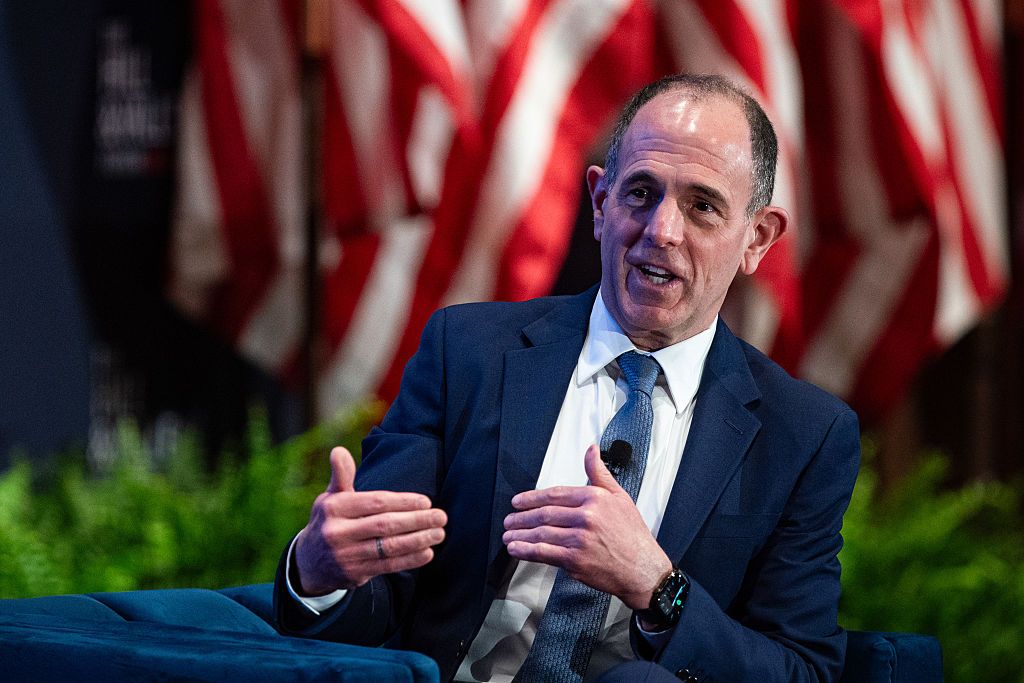
On Sept. 4, 2026, the Sejm held its third override vote. The result was 241 in favor, 198 against, and three abstentions from the 442 lawmakers present. Under Poland’s constitution, an override requires a three-fifths supermajority, which meant 266 votes. The gap was 25. Not enormous, but enough to kill the bill and send lawmakers back to the drawing board for the fourth time.
The stakes are no longer abstract. MiCA’s transitional period ended on July 1, 2026, and every crypto-asset service provider operating in the EU must now hold a license issued by its home regulator or by a regulator in another member state. Poland’s KNF cannot issue those licenses because the Sejm never passed the legislation that would give it authority to do so. The result is a country where roughly 2,000 registered crypto firms exist in a regulatory dead zone, unable to get licensed at home and increasingly looking abroad.
What the bill actually contained
The legislation, formally titled the Act on Crypto-Asset Markets, would have created a national supervisory framework aligned with MiCA. Its core provisions fell into three categories: licensing, enforcement, and consumer protection.
On the licensing side, every crypto-asset service provider operating in Poland would have needed formal authorization from the KNF. This included exchanges, custodians, portfolio managers, transfer service providers, and platforms offering advice on digital assets. Token issuers would have faced a parallel set of disclosure and registration requirements. The process mirrored frameworks already in force across Germany, France, and the Netherlands, where regulators have been granting MiCA licenses since late 2025.
Enforcement powers were the most contested piece. The KNF would have gained authority to suspend transactions for up to 96 hours, with the possibility of extension. It could impose financial penalties on service providers and token issuers. Supervisory fees were capped at 0.4% of revenue for crypto service providers and up to 0.5% for token issuers. And in the provision that drew the most criticism from the president’s office, the KNF would have been empowered to block access to websites associated with unlicensed or fraudulent crypto operations.
Consumer protection measures included mandatory disclosure requirements for token issuers, rules around marketing communications, and criminal liability for certain violations connected to token issuance and the handling of client assets.
None of this was unusual by European standards. Germany now has 79 authorized crypto-asset service providers operating under nearly identical rules. France has licensed several major platforms. Even smaller jurisdictions like Malta and Cyprus moved faster. The bill Poland kept voting on was, by the standards of European crypto regulation, conventional.
Three vetoes, one president, zero progress
The legislative history reads like a recurring nightmare for Poland’s crypto industry.
The first version of the bill passed the Sejm in late November 2025. President Nawrocki vetoed it on Dec. 1, 2025. Lawmakers attempted to override the veto four days later on Dec. 5 and fell short, voting 243 to 192. The threshold was the same 266 votes.
A revised bill made its way through the legislative process and passed again. Nawrocki vetoed it on Feb. 12, 2026. The override attempt came on April 17 and failed once more, this time 243 to 191. The government had picked up exactly zero additional votes.
The third iteration arrived with what supporters described as significant revisions. Nawrocki disagreed. When he rejected it on June 11, 2026, he noted that lawmakers had addressed only one of the 16 changes his office had proposed. His response was blunt: “Bad law does not become good law simply because it is passed a hundred times.”
The September override vote produced 241 votes in favor, two fewer than either previous attempt. Whatever momentum the government had was actually eroding.
The president’s case against regulation
It would be easy to dismiss Nawrocki’s position as obstructionism. His critics in the governing coalition certainly do. But the president’s objections are specific enough to deserve examination on their merits.
His central argument is that the bill as written would impose costs and restrictions that disproportionately burden smaller Polish firms while doing little to prevent the kinds of fraud that have already occurred. The KNF’s proposed power to block websites is the example he returns to most often. In Nawrocki’s framing, that authority is a blunt instrument that could be used against legitimate businesses, particularly smaller operators without the legal resources to challenge an administrative takedown.
The supervisory fee structure is another sore point. A cap of 0.4% of revenue may sound modest, but for early-stage companies operating on thin margins, it represents a meaningful cost. Nawrocki’s office has argued that fees at that level, combined with the compliance overhead of full KNF supervision, would push smaller firms to register in jurisdictions with lighter regulatory burdens.
There is also a philosophical dimension. Nawrocki has positioned himself as a defender of Poland’s tech entrepreneurship culture. He argues that aggressive regulation of an emerging industry could stunt growth precisely when Poland should be competing for crypto talent and investment. His office submitted an alternative proposal that it described as offering stronger safeguards against fraud without imposing the same costs on legitimate companies. The governing coalition has not taken up that proposal.
The president’s position is not without political calculation. His opposition to the crypto bill plays well with a libertarian-leaning segment of Polish voters skeptical of state intervention in technology markets. Whether that politics serves Poland’s crypto industry or simply delays its integration into the European regulatory framework is the question that refuses to go away.
The Zondacrypto backdrop
The political fight over crypto regulation is playing out against the most serious exchange scandal in Polish history. Poland had already become the EU’s lone holdout after earlier vetoes, and the Zondacrypto collapse has turned an embarrassing distinction into a full-blown crisis. Zondacrypto, formerly known as BitBay and once the largest crypto exchange in Central and Eastern Europe, has collapsed in spectacular fashion.
The platform’s founder, Sylwester Suszek, disappeared in March 2022 under circumstances that remain unclear. The exchange continued operating under new management until April 2026, when it went offline and customer withdrawals stopped. Polish prosecutors have since charged five suspects in a probe that initially focused on fraud and money laundering involving at least 350 million zlotys, roughly $96 million. Investigators now say the total exposure may run as high as 2.4 billion zlotys, approximately $535 million, as the victim count surpasses 30,000.
BB Trade Estonia, the company that operated the exchange, was declared bankrupt by an Estonian court on Aug. 27, 2026. The first meeting of creditors is scheduled for Sept. 17.
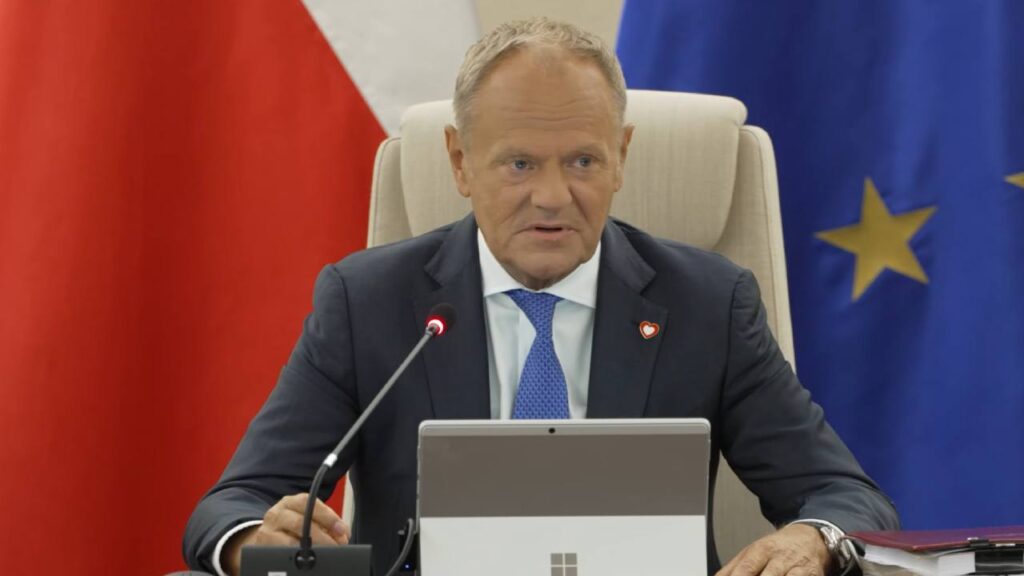
The scandal’s political tentacles have reached deep into Warsaw. Polish Olympic Committee President Radoslaw Piesiewicz was detained on Aug. 27 in connection with alleged links to Zondacrypto’s management, including allegations that he received a 40,000 euro Patek Philippe watch. Before the September override vote, Prime Minister Donald Tusk disclosed witness testimony alleging a two million zloty payment arrangement involving a foundation connected to former Justice Minister Zbigniew Ziobro.
The irony is not lost on anyone. Nawrocki’s argument against regulation is that the bill overreaches. The Zondacrypto case is a textbook example of what happens when a major crypto platform operates with minimal oversight. Both sides claim the scandal supports their position. The government says it proves regulation is urgent. The president says it proves the existing proposals would not have prevented the fraud anyway.
Regulatory exile: where Polish firms are going
For the roughly 2,000 crypto firms registered in Poland, the legislative stalemate has stopped being a political story and started being a business crisis.
MiCA’s transitional period expired on July 1, 2026. After that date, any entity providing crypto-asset services to EU customers without a MiCA license is in breach of EU law. Poland’s firms cannot get licensed at home because the KNF lacks the authority to issue those licenses. That leaves two options: get licensed in another member state and passport services back into Poland, or shut down EU-facing operations entirely.
The passporting route is the one most firms are pursuing. Lithuania, Latvia, and Germany have emerged as the preferred destinations. Lithuania’s central bank has been actively courting crypto firms for years and has a streamlined application process. Latvia offers similar advantages with lower operating costs. Germany, despite its more demanding requirements, carries the weight of BaFin authorization and access to the eurozone’s largest economy.
The mechanics work like this: a Polish company sets up a subsidiary or redomiciles its EU entity to a country with a functioning MiCA framework. It applies for authorization from that country’s regulator. Once licensed, it can passport its services across all 27 member states, including Poland. The company can continue serving Polish customers under a license its own regulator was never empowered to grant.
The process is expensive and slow. MiCA applications can take months to process, and regulators in popular destination countries are dealing with backlogs. As of the July 1 deadline, 1,062 EEA crypto firms lacked authorization, and only 281 of 1,343 registered providers had secured full MiCA licenses. Polish firms are competing for regulatory attention with companies from across the continent.
The absurdity of the situation is hard to overstate. A Polish exchange that has operated legally for years, paid taxes in Warsaw, and employed Polish developers now needs permission from a Lithuanian or Latvian regulator to continue doing business in its own country. The legal framework allows it. The economics punish it. The company pays for office space in Vilnius it may never use, hires local compliance staff to satisfy a foreign regulator, and funnels licensing fees to a government that had nothing to do with building the business.
Some firms are not bothering with the relocation route at all. Smaller operators with limited capital and customer bases confined to Poland face a choice between spending tens of thousands of euros on a foreign license application or simply closing up shop. The ones that shut down do not show up in relocation statistics, but they represent real losses in employment and innovation.
The economic cost to Poland is real. Jobs, tax revenue, and technical talent are migrating to countries that got their frameworks in place on time. Every month of delay widens the gap.
How the rest of Europe moved forward
Poland’s predicament stands out precisely because the rest of the EU has managed to implement MiCA, even if not everyone did it gracefully.
Germany moved earliest and most aggressively. BaFin had already classified crypto custody as a regulated financial service before MiCA took full effect, which gave German firms a head start. By September 2026, Germany leads the EU with 79 authorized crypto-asset service providers. Major banks including Deutsche Bank, Commerzbank, and DZ Bank have entered the crypto market under MiCA authorization. DZ Bank’s move is particularly notable. The Frankfurt-based institution received BaFin approval to roll out crypto trading through the Volksbanken and Raiffeisenbanken cooperative banking network, potentially bringing crypto access to millions of retail customers who would never open an account on a dedicated exchange.
France authorized several large platforms through the AMF and has positioned Paris as a regulatory hub for crypto firms looking at Western European markets. The Netherlands, despite implementing one of the shorter transitional periods (ending June 30, 2025), processed authorizations efficiently through the AFM. Bitvavo, the largest Dutch exchange, was among the first platforms in Europe to receive full MiCA authorization.
Even countries with less developed crypto markets found ways to meet the deadline. The Czech Republic, Estonia, Luxembourg, and Malta all implemented the full 18-month transitional period and had their frameworks operational by July 2026. Cyprus authorized platforms through CySEC, including Revolut’s crypto subsidiary.
The contrast with Poland is stark. These countries faced the same regulatory complexity, the same MiCA requirements, and in many cases smaller administrative capacity. They got it done. Poland did not, and the reason is not technical but political.
The cost of being Europe’s crypto outlier
Poland is not a minor player in the European crypto market. Roughly 30% of Poles have invested in digital assets, according to a Kraken survey, making the country one of the most crypto-engaged societies in the EU. That penetration rate exceeds stock ownership (21.4%) and bond ownership (19%) in the same population. By some estimates, nearly eight million Poles interact with crypto in some capacity.
That level of retail engagement, combined with the absence of domestic regulation, creates a dangerous combination. Polish consumers using crypto platforms have no recourse to a domestic supervisor if something goes wrong. The Zondacrypto collapse demonstrated exactly how that plays out: tens of thousands of customers, hundreds of millions of zlotys in losses, and no regulatory authority with the tools or mandate to intervene before the damage was done.
The economic case is equally concerning. Poland has a strong technology sector with significant talent in fintech and blockchain development. Warsaw and Krakow both host growing communities of crypto developers and entrepreneurs. That talent is now being pulled toward jurisdictions where companies can actually operate under a clear legal framework. A Lithuanian license application may keep a company serving Polish customers, but the jobs, office space, and tax base move to Vilnius.
The AMLA factor adds another layer of urgency. The EU’s new Anti-Money Laundering Authority is launching in 2026 and will directly supervise the largest cross-border crypto firms for AML and CFT compliance. Polish firms operating without domestic MiCA authorization may face additional scrutiny from AMLA, which has the authority to coordinate enforcement actions across member states.
Then there is DAC8, the EU’s crypto tax reporting directive. From 2026, platforms must collect and report user transaction data to tax authorities. Without a functioning domestic framework, the integration of Polish firms into this reporting infrastructure is an open question that creates compliance risk for firms and revenue risk for the Polish state.
The reputational damage compounds the financial hit. International crypto companies evaluating European expansion now look at Poland and see a country that cannot pass a basic regulatory framework. That perception is hard to reverse, even if the Sejm eventually finds the votes. The firms that left are not coming back the moment a bill passes. They have signed leases, hired staff, and built relationships with regulators in other countries. Poland is not just losing time. It is losing the kind of institutional credibility that takes years to build.
What Nawrocki’s alternative looks like
The president’s office has not simply blocked legislation without offering an alternative. Nawrocki submitted his own proposal, though details remain limited and the governing coalition has shown no interest in advancing it.
What is known is that the alternative focuses on anti-fraud measures specifically, rather than creating a full supervisory framework. The president’s approach would target criminal conduct in crypto markets without imposing the same licensing and fee structure on all market participants. His office describes it as “stronger safeguards against fraud and financial crime without imposing the same costs on legitimate companies.”
Critics argue this misunderstands MiCA’s purpose. The EU regulation is not primarily an anti-fraud instrument. It is a market structure regulation designed to create a level playing field across member states, set minimum standards for consumer protection, and enable the passporting system that allows licensed firms to operate across borders. A narrower Polish law focused only on fraud prevention would not satisfy MiCA’s requirements and would not give the KNF the authority to issue the licenses that Polish firms need.
The political dynamics make the alternative proposal unlikely to advance. The governing coalition views Nawrocki’s vetoes as obstruction and has no incentive to adopt his framework. The president, in turn, has shown no willingness to sign legislation that resembles the bills he has already rejected three times. The result is a standoff with no obvious exit.
What to watch
- A fourth bill from the governing coalition. The government has signaled it will attempt another legislative push, but the timing and content remain unknown. Any new bill must either secure the 266 votes needed to survive a veto or incorporate enough of Nawrocki’s demands to earn his signature. Neither outcome looks straightforward.
- KNF licensing authority through executive action. Some legal scholars have suggested the government could grant KNF limited crypto supervisory powers through executive orders or regulatory interpretations, bypassing the need for new legislation. This approach would face legal challenges but could provide a stopgap.
- The pace of Polish firm relocation. The number of Polish companies applying for MiCA licenses in Lithuania, Latvia, and Germany will signal how much of the industry considers the domestic situation hopeless. A wave of departures could shift political pressure enough to break the deadlock.
- Zondacrypto creditors’ meeting on Sept. 17. The first meeting of creditors will clarify the scale of customer losses and could generate enough public anger to alter the political calculus. If losses exceed initial estimates, the case for regulation becomes harder for any politician to resist.
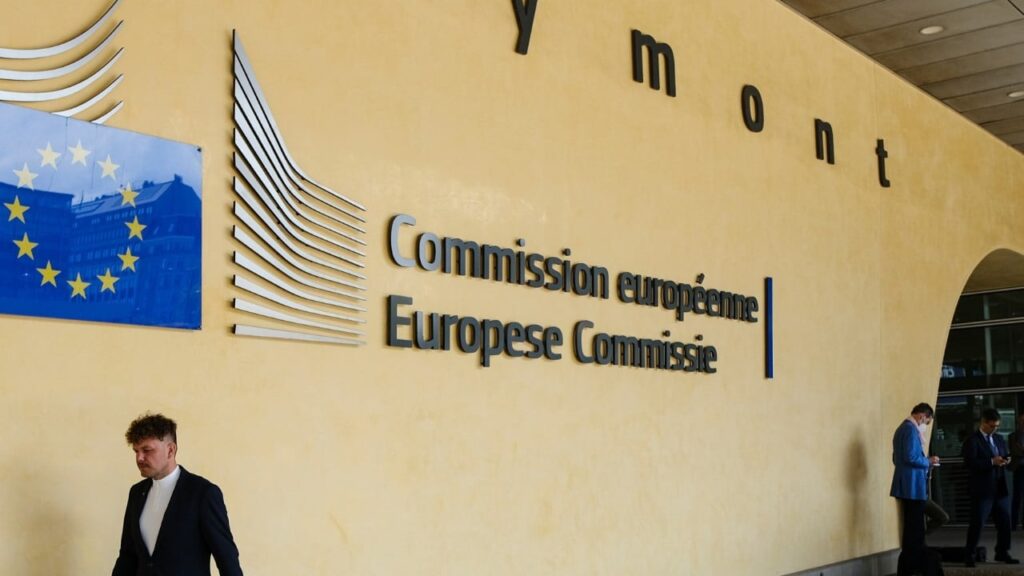
- European Commission enforcement action. Poland is now in breach of its MiCA implementation obligations. The Commission has the authority to launch infringement proceedings, which could result in financial penalties. Formal action from Brussels would transform the debate from a domestic political dispute into a matter of EU compliance.
Why did Poland’s parliament fail to override the veto?
The Sejm needed 266 votes for a three-fifths supermajority and got only 241. That left a 25-vote gap, with 198 lawmakers voting against the override and three abstaining. The constitution sets a high bar for veto overrides, and the governing coalition could not rally enough support from opposition parties.
How many times has President Nawrocki vetoed crypto legislation?
Three times. The first veto came on Dec. 1, 2025, the second on Feb. 12, 2026, and the third on June 11, 2026. Each override attempt failed, with the Sejm getting 243, 243, and 241 votes respectively against a 266-vote threshold.
What is MiCA and why does it matter for Poland?
MiCA is the EU’s Markets in Crypto-Assets Regulation, the first unified legal framework for crypto across all 27 member states. It requires every crypto service provider to hold a license from a national regulator. Poland cannot issue those licenses because the Sejm never passed the implementing legislation, leaving Polish firms in legal limbo.
What happens to Polish crypto companies without MiCA authorization?
They have two options. They can apply for a MiCA license in another EU country and then passport their services back into Poland, or they can stop serving EU customers. Most are pursuing the first option, with Lithuania, Latvia, and Germany as the most popular destinations.
Can Polish consumers still buy and sell crypto?
Yes, but with less protection than consumers in other EU countries. Polish users can access platforms licensed in other member states through the passporting system. They can also use non-EU platforms, though those may operate in a legal gray area. The key difference is that no Polish regulator has authority to oversee these transactions or intervene on behalf of consumers.
What is the Zondacrypto scandal?
Zondacrypto, formerly BitBay, was once the largest crypto exchange in Central and Eastern Europe. It collapsed in early 2026 with customer losses exceeding 350 million zlotys. Its founder disappeared in 2022, its Estonian operator was declared bankrupt in August 2026, and five suspects have been charged. The case has become a political flashpoint in the debate over crypto regulation.
Is Poland the only EU country without MiCA implementation?
Yes. Every other EU member state has implemented a domestic framework to enforce MiCA. Poland is the sole holdout, a distinction that puts its crypto industry at a competitive disadvantage and exposes the country to potential infringement proceedings from the European Commission.
Could a new bill pass with President Nawrocki still in office?
It is possible but difficult. The government would need to either find 25 additional votes for a veto override or draft a bill that addresses enough of the president’s 16 proposed changes to earn his signature. Given that three attempts have failed with diminishing vote counts, neither path is easy. This is educational analysis, not investment advice.
Disclaimer: This article was published on Sept. 7, 2026. The information provided is for educational purposes only and does not constitute financial, legal, or investment advice. Always conduct your own research before making any investment decisions.